Retail loss prevention is no longer just about catching shoplifters on camera. Today, retail shrinkage comes from many directions at once: external theft, employee theft, vendor fraud, billing errors, return abuse and simple administrative mistakes. Each of these leaks quietly eats into profit margins, distorts stock records and makes planning harder.
For years, CCTV cameras were the backbone of store security. They still play an important role, but cameras mostly record what happened. They rarely stop a loss before it occurs, and they cannot tell you why your stock count does not match your system.
This guide explains the loss prevention technology that modern retailers use beyond CCTV. You will learn how tools like RFID, EAS systems, POS exception reporting, AI analytics and integrated inventory software work together to reduce inventory shrinkage and protect your bottom line.
What Is Retail Shrinkage?
Retail shrinkage is the difference between the inventory your records say you should have and the inventory physically present in your store.
The main causes of shrinkage include shoplifting, internal theft by staff, supplier short deliveries, damaged or expired goods, pricing errors and data entry mistakes. A strong retail loss prevention plan targets every one of these, not just theft on the shop floor.
Why CCTV Alone Is Not Enough for Retail Theft Prevention
CCTV is a useful deterrent and a valuable source of evidence. However, relying on cameras alone leaves big gaps in your retail theft prevention strategy.
First, cameras are reactive. Footage is usually reviewed after a loss is discovered, which can be days or weeks later. By then, the stock is gone and the trail is cold.
Second, cameras need people to watch them. Most stores cannot afford staff who monitor screens all day, so suspicious activity often goes unnoticed in real time.
Third, many losses never appear on camera at all. A cashier who voids a bill after the customer leaves, a supplier who delivers fewer cartons than invoiced, or a staff member who applies an unauthorised discount all create losses that look perfectly normal on video. These leaks only show up in your transaction and inventory data.
That is why leading retailers now combine CCTV with data driven loss prevention technology. The goal is to move from simply recording losses to predicting and preventing them.
8 Loss Prevention Technology Solutions Beyond CCTV
1. Electronic Article Surveillance (EAS) Systems
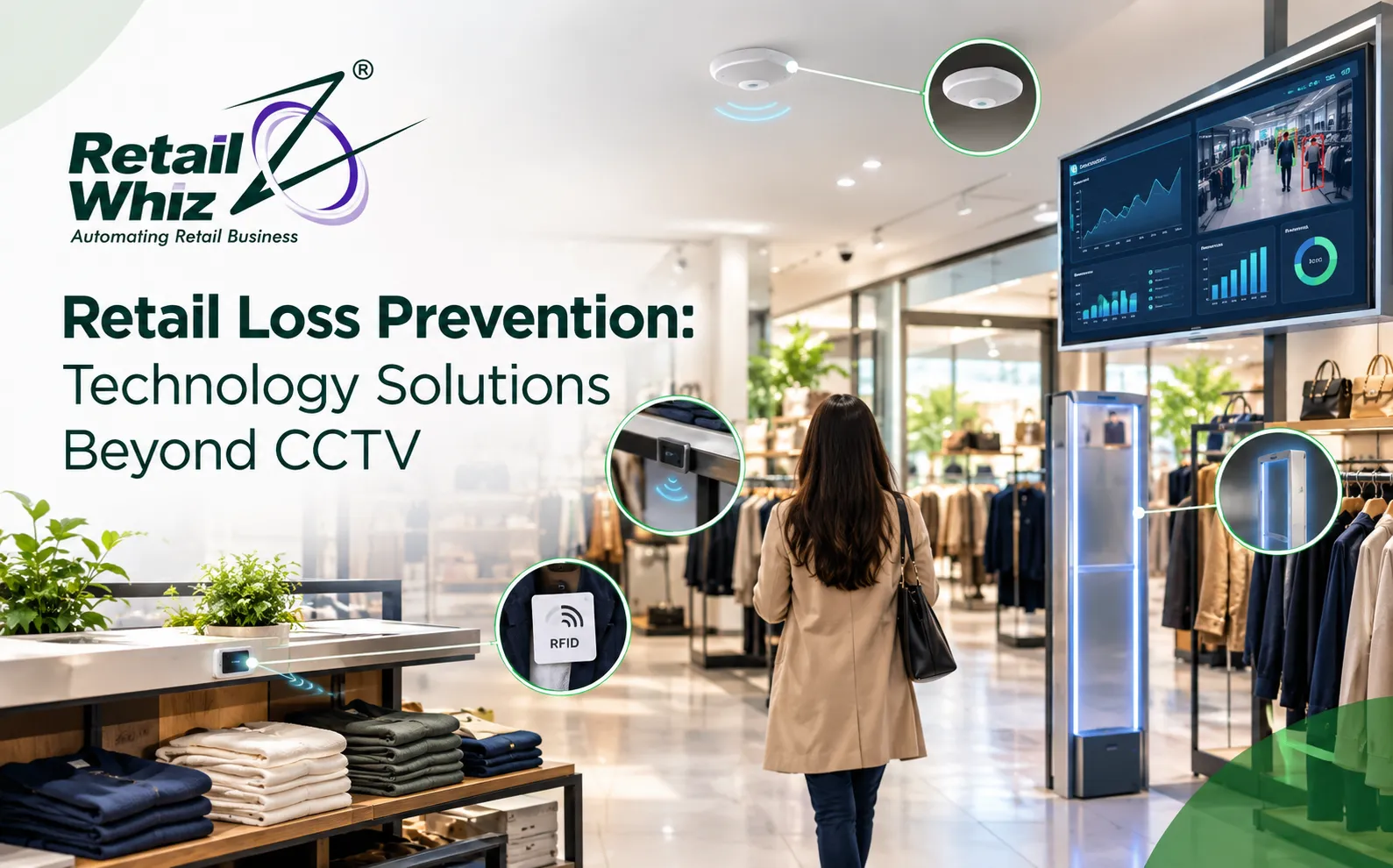
An EAS system uses security tags or labels attached to products and detection gates placed at store exits. If a tagged item passes through the gate without being deactivated or removed at the billing counter, an alarm sounds. EAS remains one of the most effective shoplifting prevention tools for apparel, electronics, cosmetics and other high value categories. It works quietly in the background and acts as a strong visible deterrent.
2. RFID Inventory Tracking
Radio Frequency Identification (RFID) takes item level visibility much further than barcodes. Each product carries a tag that can be read wirelessly, often hundreds of items at a time, without a direct line of sight. RFID inventory tracking helps retailers:
• Complete stock counts in minutes instead of hours
• Spot missing items quickly and pinpoint where they disappeared
• Track goods from the warehouse to the shelf to the checkout
• Combine anti theft and inventory accuracy in a single tag
For fashion, footwear and multi store chains, RFID is fast becoming a standard part of retail loss prevention.
3. POS Exception Reporting
Your point of sale system is one of the richest sources of loss prevention data. Modern POS software logs every bill, void, refund, discount, price override and cash drawer opening. POS exception reporting automatically flags unusual patterns, such as:
• A cashier with far more voids or refunds than colleagues
• Frequent manual price overrides or high discounts
• No sale drawer openings during quiet hours
• Returns processed without an original receipt
Role based access controls add another layer. When only supervisors can approve voids or large discounts, the opportunity for employee theft drops sharply.
4. Integrated Inventory Management Software
Many retailers do not know they have a shrinkage problem until a year end stock audit. Integrated inventory software changes that. When every purchase, transfer, sale and return updates stock in real time, gaps between book stock and physical stock become visible almost immediately.
Regular cycle counts, batch and expiry tracking, goods receipt matching against purchase orders and reason codes for damage or wastage all help you understand exactly where stock is going. If you are evaluating options, our guide on retail inventory management software features and benefits explains what to look for.
5. AI Video Analytics
This upgrades your existing cameras rather than replacing them. AI video analytics software studies live footage and alerts staff to specific behaviours, such as loitering near high value shelves, concealment of products or people leaving through emergency exits. Some systems also link video clips to POS transactions, so a suspicious void can be matched instantly with the matching footage. This turns passive CCTV into an active loss prevention tool.
6. Smart Self Checkout Monitoring
Self checkout is convenient, but it creates new risks like missed scans, barcode switching and weight mismatches. Smart scales, overhead cameras and computer vision can detect items that were not scanned and prompt the customer or alert an attendant. This keeps the speed of self service without opening a new door for theft.
7. Access Control and Smart Cash Management
Stockrooms, cash offices and high value cabinets should not be open to everyone. Electronic access control records who entered which area and when. Smart safes and cash recyclers count cash automatically, reduce manual handling and create a clear audit trail. Together, they make internal theft much harder to hide.
8. Retail Data Analytics and Shrinkage Dashboards
The real power of loss prevention technology appears when data from POS, inventory, purchasing and returns is analysed together. Analytics dashboards can reveal which stores, categories, suppliers, shifts or staff members are linked to higher losses. Predictive models can even highlight products at risk before shrinkage climbs. To understand how this works in practice, read our article on how retail analytics software turns store data into smarter decisions.
How to Build an Integrated Retail Loss Prevention Strategy
Buying gadgets is not a strategy. The best results come when technology, processes and people work together. Here is a practical roadmap for retailers of any size.
1. Measure your current shrinkage. Run a full physical stock count and compare it with your system stock. Break the gap down by store, category and supplier so you know where to focus first.
2. Fix your data foundation. Loss prevention depends on accurate data. Make sure every sale, purchase, transfer and return flows through one connected system instead of separate spreadsheets and standalone tools.
3. Protect high risk products. Use EAS tags, RFID or locked displays for small, expensive and fast moving items such as cosmetics, electronics, branded apparel and premium groceries.
4. Tighten POS controls. Set user roles, approval limits and alerts for voids, refunds and discounts. Review exception reports weekly with store managers.
5. Watch for customer and loyalty fraud. Return abuse, fake receipts and misuse of reward points are growing sources of loss. Keeping loyalty points, member profiles and transaction history inside your billing system makes misuse easier to detect. A POS integrated solution such as retail loyalty program software helps you reward genuine customers while keeping an audit trail on every redemption.
6. Train and involve your staff. Employees are your first line of defence. Teach them to recognise suspicious behaviour, follow receiving procedures and report issues without fear.
7. Review, refine and repeat. Shrinkage patterns change with seasons, promotions and new store formats. Review your loss prevention dashboards monthly and adjust controls as needed.
Key Loss Prevention KPIs Every Retailer Should Track
You cannot improve what you do not measure. These metrics show whether your loss prevention technology is actually working.
| KPI | What It Tells You |
| Shrinkage % of sales | Overall health of your loss prevention program |
| Inventory accuracy rate | How closely system stock matches physical stock |
| Voids and refunds per cashier | Possible employee theft or training gaps |
| Discount and price override rate | Misuse of manual pricing at the counter |
| Supplier delivery variance | Short or wrong deliveries against purchase orders |
| Damage and expiry write offs | Losses from handling, storage and stock rotation |
| Return rate without receipt | Possible return fraud |
Track these by store, department and month. A steady downward trend in shrinkage and a rising inventory accuracy rate are the clearest signs that your investment is paying off.
Conclusion
CCTV will always have a place in store security, but it is only one piece of the puzzle. Real retail loss prevention comes from combining EAS, RFID, POS exception reporting, AI video analytics, access control and, above all, accurate integrated data. When your POS, inventory, purchasing and loyalty data live in one system, shrinkage stops being a mystery and becomes a number you can manage.
If your current setup is spread across old software and spreadsheets, the first step is getting clean, reliable data into a single platform. RetailWhizz offers retail data migration services that move your products, stock, suppliers, pricing and customer records accurately, so your loss prevention reports are built on numbers you can trust.
Ready to reduce shrinkage and protect your margins? Book a free demo with RetailWhizz and see how a connected retail ERP helps you spot losses early and act fast.
Frequently Asked Questions
1. What is retail loss prevention?
Retail loss prevention is the set of strategies, processes and technologies retailers use to reduce shrinkage. It covers shoplifting, employee theft, vendor fraud, return fraud, damage and administrative errors that cause stock and cash to disappear.
2. What are the main causes of retail shrinkage?
The most common causes are external theft by shoplifters, internal theft by employees, supplier short deliveries, administrative and billing errors, and damaged or expired goods. Most retailers face a mix of all five, which is why a data driven approach works best.
3. Is RFID better than EAS for loss prevention?
They solve different problems. EAS is mainly an anti theft tool that triggers an alarm at the exit. RFID offers both theft detection and item level inventory tracking, which makes stock counts faster and more accurate. Many retailers use RFID tags that also work with EAS gates to get both benefits.
4. How can POS software help reduce employee theft?
POS software records every transaction, void, refund and discount by user. With role based permissions, approval limits and exception reports, managers can spot unusual patterns such as frequent voids or high manual discounts and act before losses grow.
5. How do small retailers start with loss prevention technology on a budget?
Start with what gives the biggest return for the lowest cost. Use your existing POS and inventory software to run exception reports and regular cycle counts, tighten user permissions and protect only your highest risk products with tags. Add RFID or AI analytics later as your business grows.