Winning a customer once is good. Winning that same customer ten times is what builds a profitable retail business. Retail competition is intense, online marketplaces offer deep discounts, and shoppers can switch brands with a single tap. In this environment, customer loyalty programs have become one of the most reliable ways to improve customer retention, raise average order value and increase repeat purchases.
A well-designed retail loyalty program does more than hand out discounts. It gives you customer data, builds an emotional connection with shoppers and turns casual buyers into regular visitors. The challenge is choosing the right model. A supermarket, a fashion boutique and a pharmacy do not share the same customer behaviour, so they should not run identical programs.
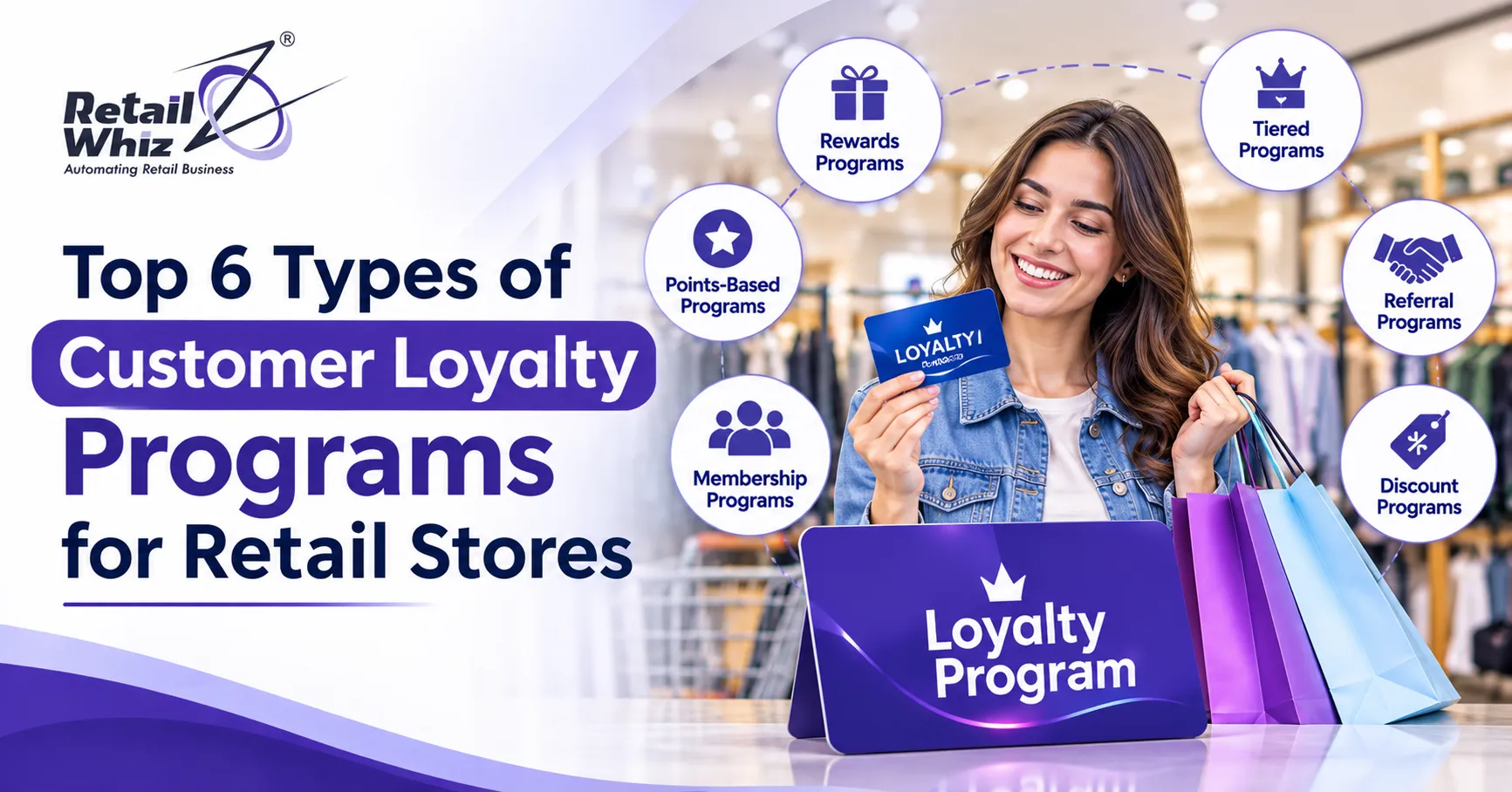
This guide explains the top 6 types of customer loyalty programs for retail stores, how each one works, where it fits best and what to consider before you launch.
Why Retail Stores Need a Loyalty Program
Before comparing the types, it helps to understand why a customer loyalty program deserves a place in your retail strategy.
- Lower acquisition cost: Keeping an existing customer is generally cheaper than finding a new one through ads, offers and promotions.
- Higher lifetime value: Loyal customers visit more often and tend to spend more per basket.
- Better customer data: Every transaction linked to a member profile shows you what people buy, when they buy and how much they spend.
- Stronger brand preference: Rewards and recognition give shoppers a reason to choose you over a competitor next door.
- Personalised marketing: With purchase history in hand, you can send relevant offers by SMS, WhatsApp or email instead of generic messages.
Now let us look at the six most effective loyalty program types for retailers.
1. Points-Based Loyalty Program
The points-based loyalty program is the most popular model in retail, and for good reason. Customers earn points for every rupee spent, and those points can later be redeemed for discounts, free products or special offers.
How it works: A customer spends ₹100 and earns 1 point. After collecting 500 points, they can redeem them for ₹50 off their next bill. You can also offer bonus points on specific products, on birthdays or during slow sales periods.
Best for: Supermarkets, grocery stores, departmental stores, pharmacies and any retailer with frequent, repeat purchases.
Advantages:
- Simple for customers to understand
- Encourages higher spending to reach the next reward
- Flexible, since you can change earning and redemption rules at any time
Things to watch: If points expire too quickly or the redemption value is too low, customers lose interest. Keep the earning rate generous and the redemption process easy.
Running a points program manually through cards or paper registers quickly becomes messy. Dedicated loyalty program software lets you track points automatically, apply rules at the billing counter and prevent misuse across stores.
2. Tiered Loyalty Program
A tiered loyalty program rewards customers with better benefits as they spend more. Shoppers move up levels, such as Silver, Gold and Platinum, and each level unlocks improved perks.
How it works: A customer who spends ₹10,000 in a year becomes a Silver member and gets 5% off. At ₹25,000 they reach Gold and receive 10% off plus early access to sales. At ₹50,000 they become Platinum and enjoy free home delivery, exclusive previews and priority service.
Best for: Fashion and lifestyle stores, footwear retailers, home décor shops, jewellery stores and multi-store retail chains.
Advantages:
- Creates a sense of status and achievement
- Motivates customers to spend more to reach the next tier
- Helps you identify and reward your most valuable customers
Things to watch: The tiers must feel reachable. If the first level is too difficult to earn, shoppers may never engage. Also make sure your top tier benefits are meaningful, not just cosmetic.
3. Paid or Membership Loyalty Program
In a paid loyalty program, customers pay a one-time or recurring fee to join and in return receive guaranteed benefits. Because the shopper has already invested money, they are more likely to return to your store and use the benefits.
How it works: A grocery store offers an annual membership for ₹499. Members receive a flat discount on every bill, free delivery above a set order value, early access to festive deals and special member-only pricing on selected products.
Best for: Supermarkets, hypermarkets, wholesale and cash-and-carry stores, and retailers with a large base of loyal households.
Advantages:
- Generates upfront revenue from membership fees
- Builds a committed customer base
- Increases visit frequency because members want to get value from their fee
Things to watch: The value must clearly exceed the fee. If customers feel they are not saving enough, they will not renew. Communicate the savings regularly, for example by showing “you saved ₹1,200 this month” on the bill.
4. Cashback and Discount-Based Loyalty Program
Indian shoppers love a good deal, which makes cashback loyalty programs and discount programs highly effective. Instead of points, the customer receives a percentage of their purchase back as store credit or a direct discount on the next visit.
How it works: A customer spends ₹2,000 and receives 5% cashback, which is credited to their account as ₹100 of store credit. The balance can be used on the next purchase within a set period.
Best for: Grocery stores, mini markets, bakeries, sweet shops, mobile accessory shops and any store where price is a key buying factor.
Advantages:
- Very easy to understand and promote
- Gives customers a clear reason to return
- Works well alongside festive and seasonal campaigns
Things to watch: Margins can shrink if cashback is too generous. Set a cap, apply it to selected categories and use expiry dates to encourage timely redemption. Pairing cashback with accurate stock and pricing data helps you protect profitability.
A smooth billing experience is critical here. Modern POS software can apply cashback, redeem store credit and print member balances at checkout in seconds, so there is no delay at the counter.
5. Referral Loyalty Program
A referral loyalty program turns your existing customers into brand ambassadors. Members are rewarded for introducing friends and family, and the new customer often receives a welcome benefit too.
How it works: An existing member shares a unique referral code. When a friend makes their first purchase using that code, both people receive bonus points or a discount voucher.
Best for: Fashion boutiques, beauty stores, kids stores, home décor retailers and neighbourhood shops that grow through word of mouth.
Advantages:
- Brings in new customers at a lower cost than paid advertising
- Referred customers tend to trust the brand more because the recommendation comes from someone they know
- Strengthens the bond with existing members
Things to watch: Make the process easy. Use a short code or a mobile number lookup so customers do not need to remember complicated details. Also set clear rules to avoid fake or repeated referrals.
6. Gamified and Punch Card Loyalty Program
A gamified loyalty program adds fun and challenge to shopping. This can be as simple as a digital punch card (buy 9, get the 10th free) or as engaging as spin-the-wheel rewards, badges, milestone challenges and scratch cards.
How it works: A coffee shop gives a stamp for every purchase. After ten stamps, the next beverage is free. A fashion store runs a monthly challenge: “Shop three times this month and unlock a surprise gift.”
Best for: Coffee shops, ice cream parlours, bakeries, sweet shops, salons and stores that attract younger shoppers.
Advantages:
- Makes the shopping experience enjoyable
- Encourages frequent, smaller visits
- Easy to launch with low upfront cost
Things to watch: Keep the rules clear and the rewards genuinely attractive. Gamification works best when it adds excitement without confusing the customer.
How to Choose the Right Loyalty Program for Your Retail Store
With six strong options available, how do you decide? Use these questions to guide your choice.
- What do your customers buy? Frequent, low-value purchases suit points or punch cards. Occasional, high-value purchases suit tiered programs.
- What are your margins? Cashback and deep discounts need healthy margins. Experience-based rewards cost less.
- How many stores do you run? Multi-store retailers need a centralised system so that points earned in one outlet can be used in another.
- Who is your target audience? Younger shoppers enjoy gamification, while families respond well to membership savings and cashback.
- What can your technology support? A great program fails if your billing system cannot handle it at the counter.
Many successful retailers also combine two models, such as a points program with tiers, or a paid membership with referral bonuses.
Best Practices for Running a Successful Loyalty Program
Choosing a model is only the beginning. These habits separate programs that thrive from those that fade away.
Make enrollment effortless. Ask for a mobile number at billing and register the customer in seconds. Long forms reduce sign-ups.
Train your billing staff. Your cashiers are the face of the program. When they explain the benefits with confidence, enrolment rates rise sharply.
Personalise your offers. Use purchase history to send relevant rewards, such as a discount on a product the customer buys regularly or a birthday gift.
Communicate often, but not too often. Share balances, expiring points and special offers through SMS or WhatsApp without overwhelming your members.
Measure what matters. Track enrolment rate, repeat purchase rate, redemption rate, average basket size and customer lifetime value. Reviewing these numbers through MIS and analytics reports shows you which rewards actually change behaviour and which ones simply cost money.
Keep it simple. If a customer needs a manual to understand your program, it is too complicated. Clear rules build trust.
Review and refine. Customer preferences change. Test new rewards, adjust earning rates and retire offers that do not perform.
Common Mistakes to Avoid
- Offering rewards that are too small to feel valuable
- Setting unrealistic thresholds that frustrate customers
- Using separate systems for each store, which breaks the customer experience
- Ignoring customer data after collecting it
- Launching without staff training or in-store promotion
- Treating the program as a discount tool instead of a relationship tool
Final Thoughts
The best customer loyalty programs for retail stores are the ones that match your customers, your margins and your operations. Points-based programs suit high-frequency shopping, tiered programs reward your top spenders, paid memberships create committed households, cashback programs appeal to value-conscious buyers, referral programs fuel word-of-mouth growth and gamified programs make every visit feel rewarding.
Start with one model, keep it simple, measure results and expand as you learn. If you are unsure which program fits your store or how to connect it with billing, inventory and reporting, expert retail consultancy services can help you design a loyalty strategy that fits your business goals and works smoothly across every outlet.
Frequently Asked Questions (FAQs)
1. What is a customer loyalty program in retail?
A customer loyalty program is a structured rewards system that encourages shoppers to buy repeatedly from the same store. Customers earn benefits such as points, discounts, cashback or exclusive offers, while the retailer gains stronger retention, better customer data and higher lifetime value.
2. Which loyalty program is best for a small retail store?
For most small stores, a points-based or cashback program is the best place to start. Both are simple to explain, easy to manage at the billing counter and effective at bringing customers back. Bakeries and cafes can also do very well with a digital punch card.
3. How much does it cost to run a retail loyalty program?
Costs depend on the reward value, the technology you use and your marketing efforts. The main expenses are the rewards you give, loyalty software and communication costs such as SMS. A good rule is to set reward rates so that the cost stays well within your profit margin while still feeling valuable to customers.
4. How do I measure the success of my loyalty program?
Track key metrics such as member enrolment rate, repeat purchase rate, average transaction value, redemption rate and customer lifetime value. Compare the spending of loyalty members with non-members to see the real impact of your program.
5. Can I run a loyalty program across multiple store locations?
Yes. With centralised software, a customer can earn points at one outlet and redeem them at another. This gives shoppers a consistent experience and gives you a single view of customer behaviour across all your stores.