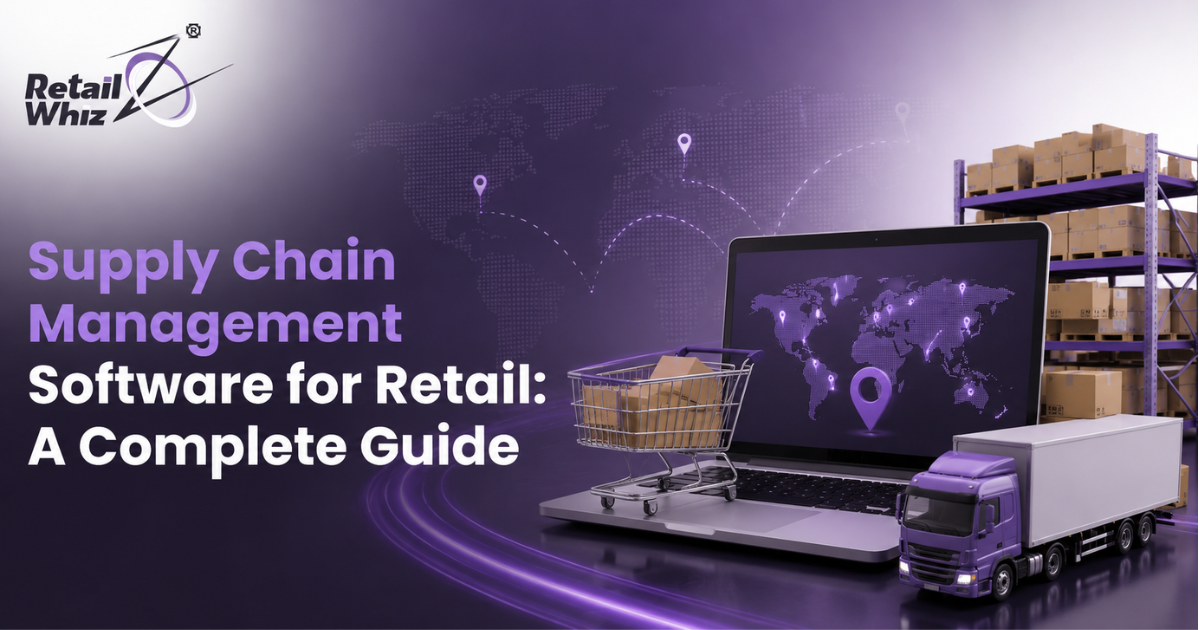
Retail businesses today run on speed and accuracy. Customers expect products on shelves when they want them, and a single stockout or delayed shipment can send them straight to a competitor. This is exactly why supply chain management software for retail has become one of the most searched and adopted technologies in the retail industry.
Whether you run a single store or manage a multi-location retail chain, understanding how supply chain management (SCM) software works, and why it matters, can help you cut costs, reduce waste, and keep customers happy. In this complete guide, we will break down what retail supply chain management software is, its core features, benefits, and how to choose the right solution for your business.
What is Supply Chain Management Software for Retail?
Supply chain management software for retail is a digital system that helps retailers plan, execute, and monitor the entire flow of goods, from sourcing raw materials or products, through procurement and warehousing, to final delivery at the store or customer’s doorstep.
Instead of relying on spreadsheets, manual stock counts, or disconnected systems, retail SCM software brings every part of the supply chain onto a single platform. This includes demand forecasting, supplier management, inventory tracking, purchase orders, warehouse operations, and logistics, all working together in real time.
For growing retail businesses, this kind of visibility is no longer optional. It is the backbone of efficient retail operations and a major driver of profitability.
Why Retail Businesses Need Supply Chain Management Software
The retail supply chain has become more complex over the past few years. Multiple sales channels, fluctuating demand, GST compliance requirements, and rising customer expectations mean that manual processes simply cannot keep up. Here is why more retailers are investing in supply chain management software.
1. Better Inventory Accuracy
Poor inventory visibility leads to overstocking, understocking, and lost sales. A good retail supply chain solution connects directly with your retail ERP software and syncs stock levels across every store and warehouse, giving you accurate, real-time data.
2. Reduced Operational Costs
Automating procurement, replenishment, and warehouse workflows reduces manual errors and labor costs, boosting overall operational efficiency across inventory management and billing processes.
3. Faster Order Fulfillment
With automated purchase orders and demand forecasting, retailers can restock faster and avoid delays that frustrate customers.
4. Improved Vendor and Supplier Relationships
Centralized supplier data, purchase history, and payment tracking help retailers negotiate better terms and maintain stronger vendor relationships.
5. Data-Driven Decision Making
Real-time dashboards and analytics give retail owners the insights they need to make smarter purchasing and stocking decisions instead of relying on guesswork.
Key Features to Look for in Retail Supply Chain Management Software
Not all supply chain software is built the same. When evaluating options, look for these essential features.
Demand Forecasting
The software should analyze historical sales data, seasonal trends, and market patterns to predict future demand accurately, helping you avoid both overstock and stockouts.
Inventory and Warehouse Management
A strong SCM platform should offer real-time tracking of stock across multiple locations. RetailWhizz’s inventory management software gives retailers complete control over stock levels, batch tracking, and multi-store visibility from a single dashboard.
Procurement and Purchase Order Automation
Automated purchase orders, supplier comparisons, and approval workflows save time and reduce manual errors. Solutions like RetailWhizz’s purchase and procurement software streamline the entire buying process, from vendor selection to order tracking.
Logistics and Distribution Management
Route optimization, delivery tracking, and warehouse-to-store transfers ensure products move efficiently through the supply chain.
Analytics and Reporting
Access to real-time reports on sales, stock turnover, and supplier performance helps retailers spot trends early. Tools such as RetailWhizz’s MIS and analytics solution turn raw retail data into actionable insights.
GST and Regulatory Compliance
For retailers operating in India, built-in GST and tax compliance features are critical to avoid penalties and simplify billing.
Integration Capabilities
The software should integrate seamlessly with your POS, accounting, and e-commerce platforms to avoid data silos.
Benefits of Implementing Supply Chain Management Software in Retail
- Improved Cash Flow: Better inventory turnover means less capital tied up in unsold stock.
- Higher Customer Satisfaction: Products are available when customers want them, reducing lost sales.
- Scalability: As your retail business grows to multiple stores or warehouses, the software scales with you.
- Reduced Wastage: Especially important for perishable goods like groceries, bakery items, or fresh produce.
- Real-Time Visibility: Track stock, orders, and shipments across your entire retail network from one place.
- Stronger Supplier Negotiations: Data on supplier performance and pricing history strengthens your negotiating position.
How to Choose the Right Supply Chain Management Software for Your Retail Business
Choosing the right SCM software depends on your business size, industry vertical, and specific pain points. Here are a few things to consider.
- Industry Fit: Whether you run a supermarket, fashion store, pharmacy, or hardware shop, look for software built with retail-specific workflows in mind.
- Ease of Implementation: A smooth rollout matters. Working with a provider that offers proper retail ERP implementation support ensures your team adopts the system quickly without disrupting daily operations.
- Scalability: Choose a solution that can grow with you, from a single store to a multi-location chain.
- Local Compliance: For retailers in India, GST-ready billing and reporting are non-negotiable.
- Customer Support and Training: Ongoing support ensures your team gets the most out of the platform.
- Cost vs ROI: Look beyond the subscription price and calculate the long-term savings from reduced wastage, better stock accuracy, and faster order cycles.
Final Thoughts
Supply chain management software for retail is no longer just a tool for large enterprises. Small and mid-sized retailers are adopting these solutions to compete effectively, reduce costs, and deliver better customer experiences. From demand forecasting to procurement automation and real-time analytics, the right SCM software can transform how your retail business operates from the back office to the storefront.
If you are ready to streamline your retail supply chain, from inventory and procurement to compliance and reporting, explore how a unified retail ERP platform can bring every part of your operations together on one system.
Frequently Asked Questions (FAQs)
1. What is the difference between supply chain management software and inventory management software?
Supply chain management software covers the entire journey of goods, including sourcing, procurement, warehousing, and logistics. Inventory management software is a component within this system, focused specifically on tracking and managing stock levels.
2. Is supply chain management software suitable for small retail businesses?
Yes, Many modern SCM solutions are scalable and affordable, making them practical for small and mid-sized retailers, not just large enterprises. Even a single-store business benefits from better demand forecasting and stock accuracy.
3. How does supply chain management software help reduce retail costs?
It reduces costs by automating manual processes, minimizing overstocking and stockouts, improving supplier negotiations, and cutting down on wastage, especially for perishable or seasonal products.
4. Can supply chain management software integrate with my existing POS and accounting systems?
Most modern retail SCM platforms are built to integrate with POS systems, accounting software, e-commerce platforms, and payment gateways, ensuring smooth data flow across your entire business.
5. How long does it take to implement supply chain management software in a retail business?
Implementation timelines vary based on business size and complexity, but with proper planning and support, most retailers can go live within a few weeks. Working with an experienced implementation team helps ensure a smoother, faster rollout.