Every retailer knows the pain of walking into a store and finding the best-selling item missing from the shelf. Every retailer also knows the pain of a back room full of slow-moving stock that ties up cash and eventually gets marked down. Both problems come from the same root cause: an inaccurate view of future demand.
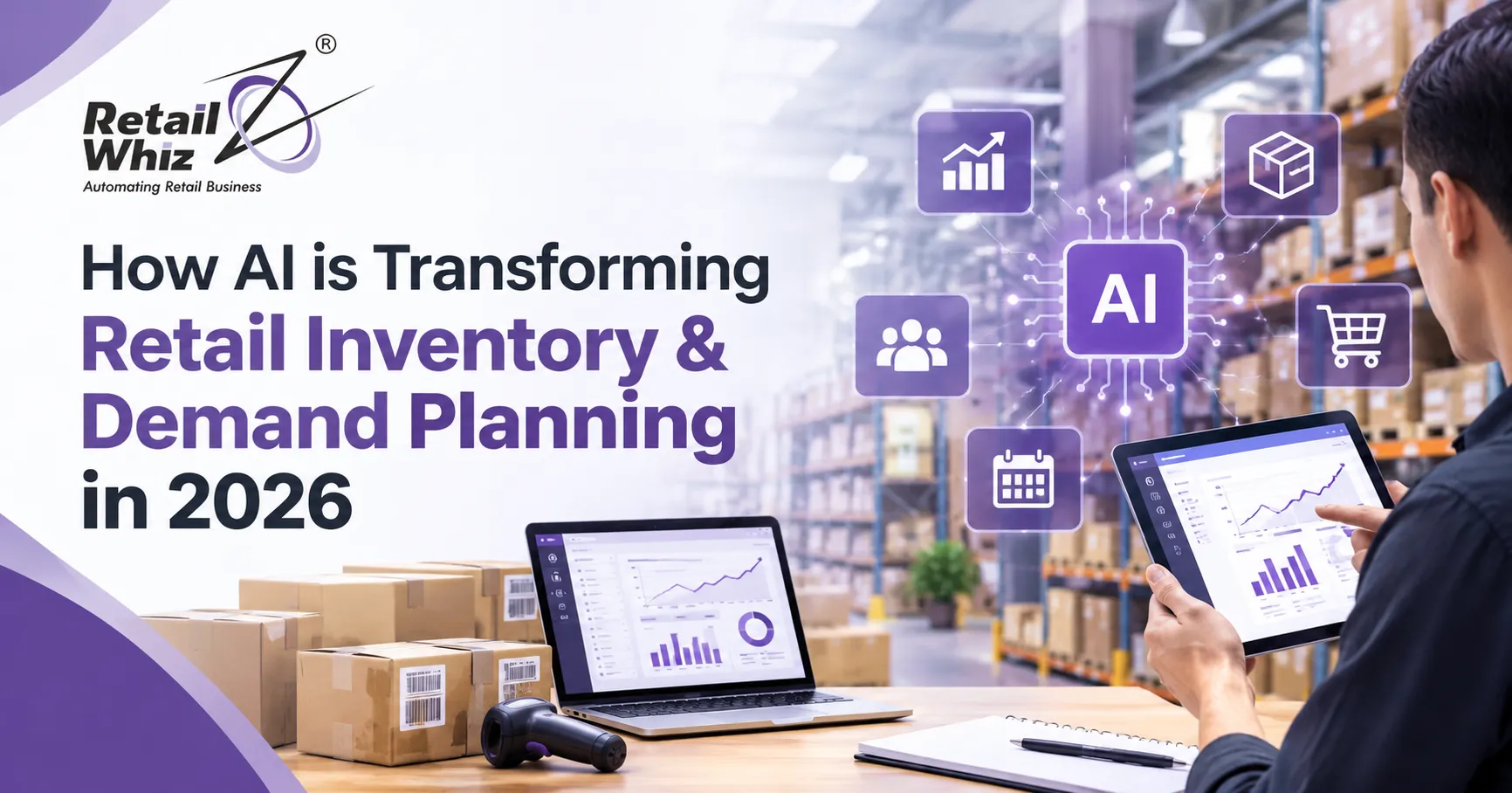
In 2026, AI in retail is closing that gap. Machine learning models now read sales history, weather, festivals, promotions, pricing, and even local events to predict what customers will buy, where, and when. This guide explains how AI demand forecasting and intelligent inventory management work, what benefits retailers see, and how to adopt these tools without disrupting daily operations.
Why Traditional Demand Planning Is Falling Behind
For decades, retailers planned inventory using spreadsheets, last year’s sales, and the instincts of experienced buyers. That approach worked when assortments were small and customer behavior was predictable. Today it breaks down for several reasons:
- Shorter product life cycles. Trends change in weeks, not seasons.
- Omnichannel selling. Stores, websites, marketplaces, and quick commerce apps all draw from the same stock.
- Volatile demand. Social media can turn an ordinary product into a sellout overnight.
- Rising SKU counts. A supermarket or apparel chain may manage tens of thousands of SKUs across many locations.
- Higher carrying costs. Warehousing, capital, and shrinkage costs make excess stock expensive.
Manual demand planning cannot process this many variables at once. Rules of thumb such as “order the same as last month plus 10 percent” ignore too much context. That is where artificial intelligence steps in.
What Is AI Demand Forecasting?
AI demand forecasting uses machine learning algorithms to predict future sales at the SKU, store, and even day level. Unlike simple statistical averages, these models learn patterns from large datasets and keep improving as new data arrives.
A modern forecasting engine typically analyzes:
- Historical sales by SKU, store, and channel
- Seasonality, festivals, and holidays
- Promotions, discounts, and price changes
- Weather and regional events
- Competitor activity and market trends
- Stock availability, including periods when items were out of stock and sales were lost
That last point matters more than most people realize. A product that sold zero units because it was unavailable did not have zero demand. Good AI models correct for this “censored demand” so the forecast reflects what customers wanted, not just what they could buy.
Key Ways AI Is Transforming Retail Inventory Management in 2026
1. Predictive Replenishment and Automated Purchase Orders
The most visible change is automated replenishment. Instead of a buyer reviewing hundreds of items each morning, the system calculates reorder points, safety stock, and order quantities automatically. It considers supplier lead times, minimum order quantities, shelf life, and expected demand before suggesting or even raising a purchase order.
Reliable retail inventory management software makes this practical because it connects sales, stock, and purchasing data in one place. If you want a deeper look at what these systems should include, read our guide on retail inventory management software features and benefits before you evaluate vendors.
2. Store-Level and SKU-Level Forecasting
A national average is rarely useful. A rain-soaked coastal store and a dry inland store will not sell the same volume of umbrellas or cold drinks. AI models forecast at the most granular level possible, which lets retailers allocate stock to the right store instead of spreading it evenly and hoping for the best.
3. Smarter Safety Stock
Safety stock is the buffer that protects against uncertainty. Set it too high and you carry dead inventory. Set it too low and you lose sales. AI calculates safety stock dynamically for each item based on demand variability and supplier reliability, so buffers rise when risk is high and shrink when demand is stable.
4. Dynamic Pricing and Markdown Optimization
Inventory and pricing are closely linked. AI tools recommend when to discount slow-moving items, how deep the discount should go, and which stores should run it. This reduces end-of-season clearance losses and protects margins on fast movers.
5. Real-Time Inventory Visibility
Accurate demand planning depends on accurate stock data. AI helps detect anomalies such as unusual shrinkage, billing mismatches, or stock records that do not match physical counts. Combined with barcode, RFID, and POS data, retailers get a near real-time picture of stock across stores and warehouses.
6. Generative AI Assistants for Planners
One of the biggest 2026 trends is the arrival of generative AI copilots inside planning tools. Instead of building reports manually, a category manager can ask, “Which SKUs are likely to stock out next week in my top ten stores?” and receive a plain-language answer with suggested actions. This lowers the skill barrier and speeds up decisions.
The Business Benefits of AI-Driven Demand Planning
Retailers that adopt AI-based planning commonly report improvements in several areas. Actual results vary by business, data quality, and category, but the direction is consistent:
- Fewer stockouts. Better forecasts keep popular items available, protecting sales and customer loyalty.
- Lower overstock. Right-sized orders free up working capital and reduce markdowns.
- Reduced wastage. For grocery, pharmacy, and FMCG, better expiry and batch planning cuts spoilage.
- Improved forecast accuracy. Machine learning models often outperform manual and basic statistical methods, particularly for volatile items.
- Higher planner productivity. Buyers spend less time on routine reordering and more on assortment, vendor negotiation, and strategy.
- Better cash flow. Leaner inventory means less money locked in unsold goods.
Data Foundation: The Step Most Retailers Skip
AI is only as good as the data it learns from. Duplicate SKUs, missing barcodes, inconsistent units of measure, and years of unreconciled stock records will produce weak forecasts, no matter how advanced the algorithm is.
Before switching on any forecasting tool, retailers should clean and standardize their product masters, supplier records, pricing, and transaction history. If you are moving from an older system, structured retail data migration services can transfer items, stock, suppliers, and historical sales with validation checks so your new platform starts with reliable data.
A practical data readiness checklist looks like this:
- Remove duplicate and inactive SKUs.
- Standardize categories, brands, and units of measure.
- Reconcile physical stock against system stock.
- Capture at least 12 to 24 months of clean sales history.
- Record promotions and stockout periods so the model can learn from them.
How Retail Analytics Connects Forecasts to Action
A forecast has no value if nobody acts on it. This is why analytics dashboards matter as much as the prediction engine. Planners need clear views of sell-through rates, stock cover, aging inventory, supplier fill rates, and store performance to make quick decisions.
Strong MIS and analytics software for retail brings these metrics together so buyers, store managers, and owners see the same numbers. Alerts for low stock cover, slow movers, and unusual sales spikes turn passive reports into active decision tools.
Omnichannel Planning and Supply Chain Integration
In 2026, customers expect to buy online, pick up in store, or receive home delivery within hours. This makes inventory planning a network problem rather than a store problem. AI helps decide which location should fulfill an order, when to transfer stock between stores, and how much to keep at the warehouse versus the shelf.
The same intelligence extends upstream. Forecasts feed supplier planning, transport scheduling, and warehouse operations, reducing bullwhip effects where small demand changes create large swings in orders. For a wider view of how planning connects with logistics, procurement, and warehousing, explore our complete guide to supply chain management software for retail.
Challenges to Watch Out For
AI is powerful, but it is not magic. Retailers should plan for these common challenges:
- Poor data quality. Covered above, and the number one reason AI projects underperform.
- Change management. Buyers may distrust automated suggestions at first. Start with recommendations and let teams approve orders before moving to full automation.
- New product forecasting. Items with no sales history need proxy models based on similar products.
- Black box concerns. Choose tools that explain why a forecast changed, so planners can trust and challenge it.
- Integration gaps. Forecasting tools that do not connect to POS, purchasing, and accounting create extra manual work.
How to Get Started With AI Demand Planning
You do not need to overhaul everything at once. A phased approach lowers risk and shows value early.
- Define clear goals. Choose measurable targets such as reducing stockouts on top 500 SKUs or cutting aged stock by a set percentage.
- Audit your data. Fix master data problems first.
- Start with a pilot. Test AI forecasting on one category or a few stores.
- Keep humans in the loop. Let planners review and override suggestions while trust builds.
- Measure and refine. Track forecast accuracy, fill rate, inventory turnover, and gross margin return on investment.
- Scale gradually. Expand to more categories, stores, and channels once results are proven.
The Future: What to Expect Beyond 2026
The direction is clear. Retail planning is moving toward autonomous inventory systems where AI monitors demand signals continuously, adjusts forecasts daily, raises purchase orders, and rebalances stock with minimal human intervention. Expect tighter links between demand sensing, pricing engines, and supplier collaboration platforms, along with conversational AI interfaces that make advanced analytics accessible to every store manager.
Retailers who build clean data foundations and adopt connected systems today will be best placed to benefit as these capabilities mature.
Conclusion
AI is no longer a futuristic add-on for large enterprises. In 2026, it is a practical tool that helps retailers of every size forecast demand more accurately, keep shelves stocked, reduce waste, and free up cash. The winners will be those who combine quality data, integrated retail software, and empowered planners who use AI as a decision partner rather than a replacement.
If you are still relying on spreadsheets and gut feel for inventory planning, now is the time to modernize. Start with your data, pilot in one category, and scale as results appear.
Frequently Asked Questions (FAQs)
1. What is AI demand forecasting in retail?
AI demand forecasting uses machine learning to predict future product sales by analyzing historical data, seasonality, promotions, pricing, weather, and other signals. It produces more granular and adaptive forecasts than traditional spreadsheet or averaging methods.
2. How does AI reduce stockouts and overstock?
AI predicts demand at the SKU and store level, then calculates optimal order quantities and safety stock. This keeps popular items available while preventing excess purchases of slow-moving products, which improves both sales and cash flow.
3. Can small and mid-sized retailers use AI for inventory planning?
Yes. Cloud-based retail software and built-in analytics have made AI-driven planning affordable and accessible. Smaller retailers can begin with automated reorder suggestions and analytics dashboards, then adopt more advanced forecasting as their data grows.
4. What data is needed for accurate AI demand planning?
You need clean product master data, transaction-level sales history (ideally 12 to 24 months), current stock records, supplier lead times, and information on promotions and stockouts. Better data quality leads directly to better forecasts.
5. How long does it take to see results from AI inventory management?
Many retailers see early improvements in reorder accuracy and stock visibility within a few months of a well-scoped pilot. Full benefits, such as lower overstock and higher inventory turnover, typically build over several planning cycles as the models learn.