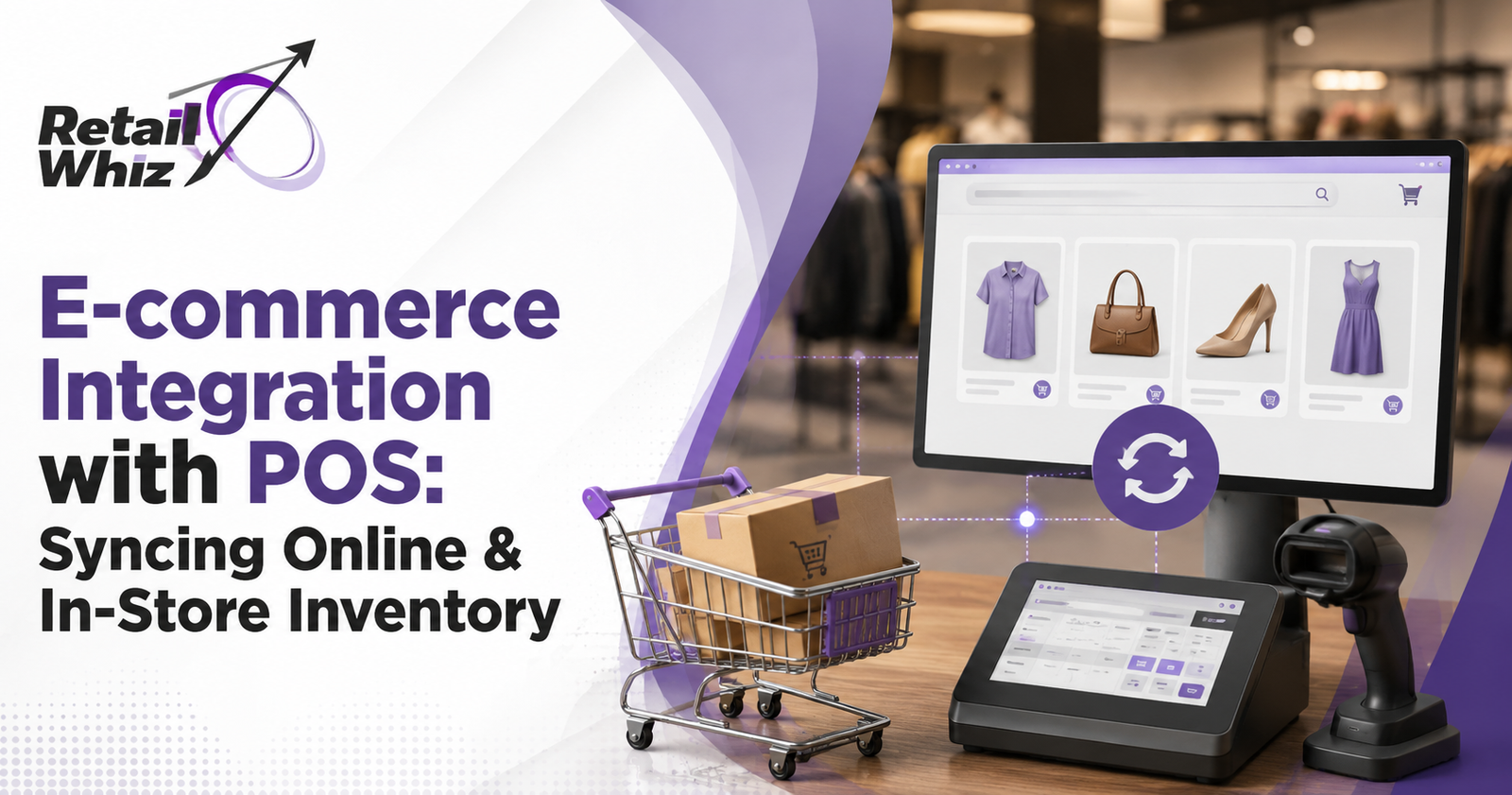
Retail has changed forever. Customers now shop across websites, mobile apps, marketplaces, and physical stores, often within the same day and sometimes for the same product. This shift has made one thing very clear for retailers: if your online store and your physical store are not talking to each other, you are losing money, customers, and control over your business.
This is exactly where e-commerce integration with POS becomes critical. When your point of sale system and your online store are connected, inventory, orders, and customer data flow automatically between both channels. No more manual updates, no more overselling, and no more guessing how much stock you actually have.
In this blog, we will break down what e-commerce POS integration really means, why syncing online and in-store inventory is non-negotiable in 2026, how the process works, and what to look for when choosing the right solution for your retail business.
What Is E-commerce Integration with POS?
E-commerce integration with POS is the process of connecting your point of sale system (used in your physical store) with your online store or e-commerce platform (like Shopify, WooCommerce, or Magento). This connection allows both systems to share real time data such as:
- Inventory levels across all locations and channels
- Sales transactions, whether online or in-store
- Product details, pricing, and variants
- Customer information and purchase history
- Order status and fulfillment updates
Instead of managing two separate systems with two separate stock counts, retailers get a single, unified view of their entire business. This is often called omnichannel retail, and it has become one of the biggest priorities for growing retail brands.
Why Syncing Online and In-Store Inventory Matters
If you are still updating your online store manually after every in-store sale, or checking spreadsheets to confirm stock, you are not alone, but you are also leaving revenue on the table. Here is why real time inventory sync should be a priority.
1. Eliminates Overselling and Stockouts
One of the most common and costly problems in retail is selling a product online that is already sold out in the store, or vice versa. This leads to cancelled orders, refunds, and frustrated customers. With proper POS and e-commerce integration, inventory counts update instantly across every channel the moment a sale happens, whether it is online or at the checkout counter.
2. Builds Customer Trust
Nothing damages customer confidence faster than confirming an order only to receive a cancellation email later because the item was out of stock. Accurate, synced inventory ensures customers only see products that are actually available, which improves the shopping experience and increases repeat purchases.
3. Saves Time and Reduces Manual Errors
Manually updating stock across multiple platforms is time consuming and prone to human error. Automated syncing between your POS and e-commerce store removes this repetitive task completely, freeing up your staff to focus on customer service and sales instead of data entry.
4. Enables Smarter Business Decisions
When your sales and inventory data live in one connected system, you get accurate, real time reports on what is selling, what is not, and where. This makes demand forecasting, reordering, and inventory planning far more precise, helping you avoid both overstocking and understocking.
5. Supports Omnichannel Fulfillment
With synced inventory, retailers can offer services like buy online, pick up in store (BOPIS), ship from store, and in-store returns for online orders. These options are now expected by customers and can only work smoothly when inventory data is accurate across all locations at all times.
How E-commerce and POS Integration Works
While the technical setup can vary depending on your platform, most POS and e-commerce integrations follow a similar process.
Step 1: Connect Your Systems
The first step is linking your point of sale software with your e-commerce platform, either through a native integration, a plugin, or an API connection. Many modern POS providers offer built-in connectors for popular e-commerce platforms, making this step straightforward.
Step 2: Sync Product Catalogs
Once connected, product information such as SKUs, descriptions, images, variants, and pricing is synchronized between both systems. This ensures the same product listing appears consistently whether a customer is browsing online or in-store.
Step 3: Enable Real Time Inventory Updates
This is the core of the integration. Every time a product is sold, returned, or restocked in either channel, the system automatically adjusts the total available quantity across all sales channels. Retailers using inventory management software with real time tracking benefit from this automatic stock reconciliation without lifting a finger.
Step 4: Unify Order Management
Orders placed online and in-store are consolidated into a single dashboard, allowing staff to view, process, and fulfill orders from one place regardless of where the sale originated.
Step 5: Centralize Reporting and Analytics
With both channels feeding data into one system, retailers can pull unified sales reports, track best sellers, monitor stock movement, and identify trends across their entire business rather than analyzing each channel separately.
Key Features to Look for in a POS and E-commerce Integration
Not all integrations are built the same. When evaluating a solution for your retail business, look for these essential features.
Real time synchronization, not batch updates every few hours, since delays can still cause overselling during high traffic periods.
Multi-location support if you operate more than one store, so inventory is tracked accurately across every branch and warehouse.
Multi-channel compatibility so your system can connect with marketplaces like Amazon and Flipkart in addition to your own website.
Automated low stock alerts that notify you before items run out, helping you reorder on time.
Centralized customer data so loyalty points, purchase history, and preferences are consistent whether a customer shops online or walks into your store.
Scalability to ensure the system can handle growth in product catalog size, order volume, and additional sales channels over time.
A reliable POS software built for Indian retail stores with these capabilities in mind makes the entire integration process significantly smoother for growing retail businesses.
Common Challenges During Integration (And How to Solve Them)
Data mismatches: Product data entered differently across platforms can cause sync errors. Standardizing SKUs and naming conventions before integration avoids this issue.
Delayed updates: Some integrations rely on scheduled syncs rather than real time updates, which can create short windows of inaccurate stock. Choosing a solution with instant syncing solves this.
Staff training gaps: Even the best system will underperform if staff are not trained to use it properly. Investing time in onboarding your team pays off quickly.
Platform compatibility: Not every POS works seamlessly with every e-commerce platform. Checking compatibility and available integrations beforehand saves time and frustration later.
Why Retail Businesses Cannot Ignore This Anymore
Consumer behavior has permanently shifted toward channel flexibility. Shoppers research online, buy in-store, order online for in-store pickup, and expect their experience to feel seamless no matter how they interact with a brand. Retailers who fail to sync their online and offline inventory risk losing sales to competitors who can offer accurate stock visibility, faster fulfillment, and a more reliable shopping experience.
Whether you run a single boutique store or a multi-location retail chain, integrating your e-commerce platform with your POS system is no longer optional. It is one of the most effective ways to reduce operational headaches, improve customer satisfaction, and unlock growth across every sales channel you operate.
If you are exploring how this fits into your broader retail strategy, our guide on building an omnichannel retail strategy to integrate online and offline stores covers additional strategies to keep your channels connected and your operations efficient.
Final Thoughts
E-commerce integration with POS is not just a technical upgrade, it is a strategic move that directly impacts customer experience, operational efficiency, and revenue. By syncing your online and in-store inventory in real time, you eliminate overselling, reduce manual work, and gain a clear, unified view of your entire retail operation.
As omnichannel retail continues to grow, businesses that invest in proper integration today will be far better positioned to scale, compete, and deliver the seamless shopping experience customers now expect.
If you are ready to unify your online and offline retail operations, our guide on accurate retail inventory forecasting to predict demand can help you plan stock levels with confidence as you scale across every channel.
Frequently Asked Questions (FAQs)
1. What does e-commerce integration with POS actually mean?
It means connecting your point of sale system with your online store so that inventory, sales, and customer data are automatically shared and updated across both channels in real time.
2. Why is syncing online and in-store inventory important for retailers?
Syncing prevents overselling, reduces stockouts, saves time on manual updates, and gives retailers a single accurate view of stock across all sales channels.
3. Can small retail businesses benefit from POS and e-commerce integration?
Yes. Even small or single-location stores benefit significantly, since manual inventory tracking becomes harder to manage as online sales grow, and integration prevents costly stock errors early on.
4. Which e-commerce platforms can be integrated with a POS system?
Most modern POS systems support integration with popular platforms such as Shopify, WooCommerce, Magento, and various online marketplaces, depending on the POS provider’s available connectors.
5. How long does it take to set up POS and e-commerce integration?
Setup time varies based on your product catalog size and platform complexity, but most integrations can be completed within a few days to a couple of weeks with proper planning and support.