Running a single retail store is challenging enough, but managing a franchise network spread across cities, states, or even countries brings an entirely different level of complexity. Every outlet has its own inventory, staff, billing counter, and daily sales targets, yet the brand still needs to look and function the same everywhere. This is exactly where franchise management software steps in. It gives retail brands a centralized system to monitor performance, standardize processes, and keep every franchise outlet aligned with the parent company’s goals, without the owner having to physically visit each location.
In this blog, we will break down what franchise management software actually does, why multi outlet retail brands need it, the core features to look for, and how the right solution can transform the way a growing retail chain operates.
What Is Franchise Management Software?
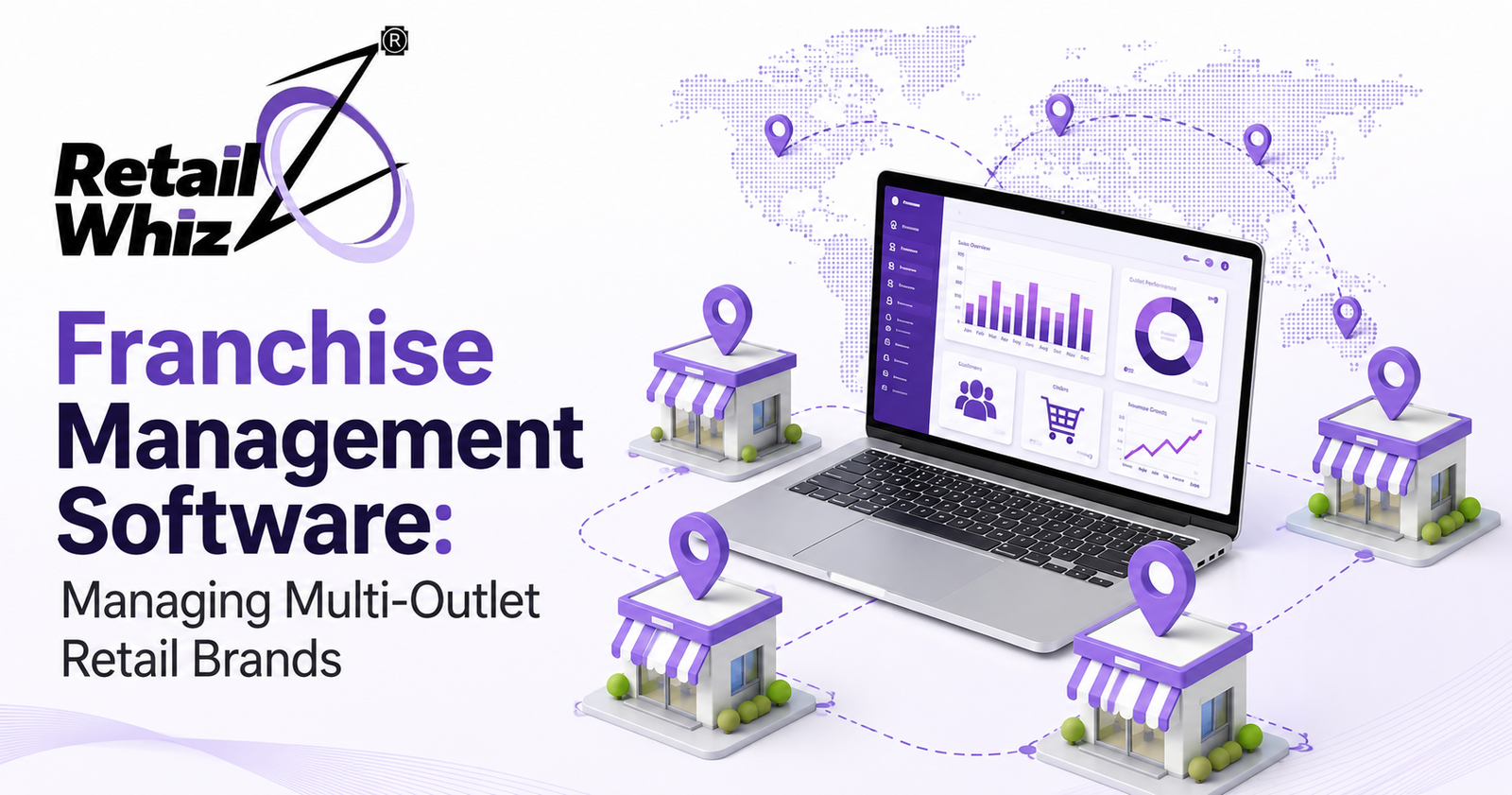
Franchise management software is a digital platform that helps franchisors and franchisees manage day to day retail operations from a single, unified dashboard. Instead of using separate spreadsheets, disconnected billing tools, or manual reports from each store, the entire franchise network runs on one integrated system. This includes point of sale operations, inventory tracking, employee management, royalty calculation, and real time sales reporting across all outlets.
For multi outlet retail brands, this centralization is not just a convenience, it is a necessity. When a brand expands from three stores to thirty, manual tracking becomes impossible to sustain, and errors in stock counts, billing, or staff scheduling start eating directly into profit margins.
Why Multi Outlet Retail Brands Need Franchise Management Software
1. Centralized Visibility Across All Locations
One of the biggest pain points for franchise owners is not knowing what is happening at each outlet in real time. Franchise management software solves this by consolidating data from every store into a single retail dashboard. Owners can instantly see which outlets are performing well, which ones are running low on stock, and where sales are dipping, all without waiting for end of day reports.
2. Standardized Operations Across Every Outlet
A retail brand’s biggest asset is consistency. Customers expect the same product quality, pricing, and service experience whether they walk into the outlet in Mumbai or the one in Bangalore. Franchise management software enforces standard operating procedures by syncing pricing, promotions, product catalogs, and discounts across every location automatically, removing the risk of a franchisee applying the wrong price or an outdated offer.
3. Simplified Inventory and Stock Management
Multi outlet retail businesses often struggle with stock mismatches, either overstocking slow moving items or running out of bestsellers during peak demand. A dedicated inventory management software tracks stock levels at every outlet in real time, triggers automatic reorder alerts, and allows easy stock transfers between branches when one outlet is short and another has surplus.
4. Accurate Royalty and Revenue Tracking
Royalty calculation is one of the most common friction points between franchisors and franchisees. Manual calculations based on outlet reported sales are prone to disputes and delays. Franchise management software automates royalty computation directly from actual point of sale data, ensuring transparency and reducing payment related conflicts.
5. Better Staff and Workforce Management
With multiple outlets, tracking employee attendance, shift schedules, and performance manually is time consuming and error prone. Integrated workforce management tools within franchise software allow HR and outlet managers to handle staffing, payroll inputs, and performance tracking from one place, saving hours of administrative work every week.
Core Features to Look for in Franchise Management Software
When evaluating a retail management solution for a growing franchise network, brands should prioritize the following capabilities.
Multi location point of sale integration The software should connect seamlessly with a reliable POS software used at every outlet, allowing sales data to flow into a central database instantly, without manual data entry.
Real time inventory synchronization Stock levels, product movement, and reorder points should update live across all outlets so franchise owners always know exactly what is available where.
Centralized reporting and analytics Dashboards that break down sales by outlet, region, product category, and time period help owners identify trends and make faster, data backed decisions.
Franchise billing and royalty automation As discussed earlier, billing accuracy and automated royalty calculation are essential for maintaining trust between franchisors and franchisees.
Customer relationship management (CRM) integration A unified CRM ensures customer purchase history, loyalty points, and preferences are visible regardless of which outlet the customer visits, creating a consistent shopping experience across the brand.
Scalability for future outlet expansion The software should be built to handle growth. Adding a new outlet should take minutes, not weeks of manual configuration.
How Franchise Management Software Improves Profitability
Retail chains that adopt a dedicated franchise management system typically see measurable improvements in three key areas.
First, operational costs drop because manual reconciliation, duplicate data entry, and paperwork are eliminated. Second, inventory accuracy improves, which directly reduces stock wastage and lost sales due to out of stock situations. Third, faster decision making becomes possible because owners are working with live data through a proper MIS and analytics setup instead of outdated weekly or monthly reports.
Brands that combine franchise management software with a strong point of sale and billing setup often see the fastest return on investment, since billing accuracy and inventory control are usually the two biggest sources of revenue leakage in multi outlet retail.
Challenges Multi Outlet Retail Brands Face Without the Right Software
Before adopting a centralized system, most growing franchise brands face similar recurring problems.
- Inconsistent pricing and promotions across outlets, leading to customer confusion and trust issues
- Delayed or inaccurate sales reporting, making it hard to spot underperforming stores quickly
- Manual royalty disputes between franchisor and franchisee due to lack of transparent data
- Inventory imbalances, with some outlets overstocked and others constantly running out of stock
- Difficulty onboarding new franchise outlets quickly due to lack of standardized systems
These challenges compound as the brand scales. What works for five outlets often breaks down completely at twenty or fifty, which is why forward thinking retail brands invest in franchise management software early rather than waiting until operations become unmanageable.
Choosing the Right Franchise Management Software for Your Retail Brand
Not every franchise management platform is built the same way, so retail brands should evaluate a few key factors before committing to one.
Look for a solution that offers cloud based access, so outlet performance can be monitored from anywhere, not just from a head office terminal. Prioritize platforms that integrate easily with existing POS hardware and payment gateways already in use at outlets, since replacing hardware across dozens of locations is expensive and disruptive. Also check whether the vendor offers a structured retail ERP implementation process with dedicated onboarding support, since rolling out new software across multiple outlets simultaneously requires proper training for outlet staff and managers.
Final Thoughts
As retail brands expand from a handful of stores into full fledged franchise networks, the tools used to manage day to day operations need to scale just as fast as the business itself. Franchise management software removes the guesswork from running multiple outlets by centralizing inventory, billing, royalty tracking, and reporting into one connected system. For any retail brand serious about sustainable, profitable growth across multiple locations, investing in the right franchise management platform is no longer optional, it is a competitive necessity.
If your retail brand is currently managing outlets through spreadsheets or disconnected tools, now is the right time to explore a centralized franchise management approach before scaling further.
Frequently Asked Questions (FAQs)
1. What is franchise management software used for?
Franchise management software is used to centralize and manage operations across multiple retail outlets, including inventory tracking, point of sale billing, royalty calculation, staff management, and real time sales reporting, all from a single dashboard.
2. How does franchise management software help multi outlet retail brands?
It gives brand owners real time visibility into every outlet’s performance, standardizes pricing and promotions across locations, automates royalty and billing calculations, and simplifies inventory management to reduce stock mismatches between stores.
3. Is franchise management software suitable for small retail chains?
Yes. Even retail brands with just three to five outlets benefit from franchise management software, since it prevents the operational chaos that typically begins as a brand starts to scale beyond a single store.
4. What features should I look for in a good franchise management system?
Key features include multi location POS integration, real time inventory synchronization, centralized analytics and reporting, automated royalty and billing, CRM integration, and the ability to easily onboard new outlets as the brand grows.
5. Can franchise management software integrate with existing POS systems?
Most modern franchise management platforms are designed to integrate with commonly used POS and billing systems, allowing retail brands to adopt centralized management without replacing their existing outlet hardware.