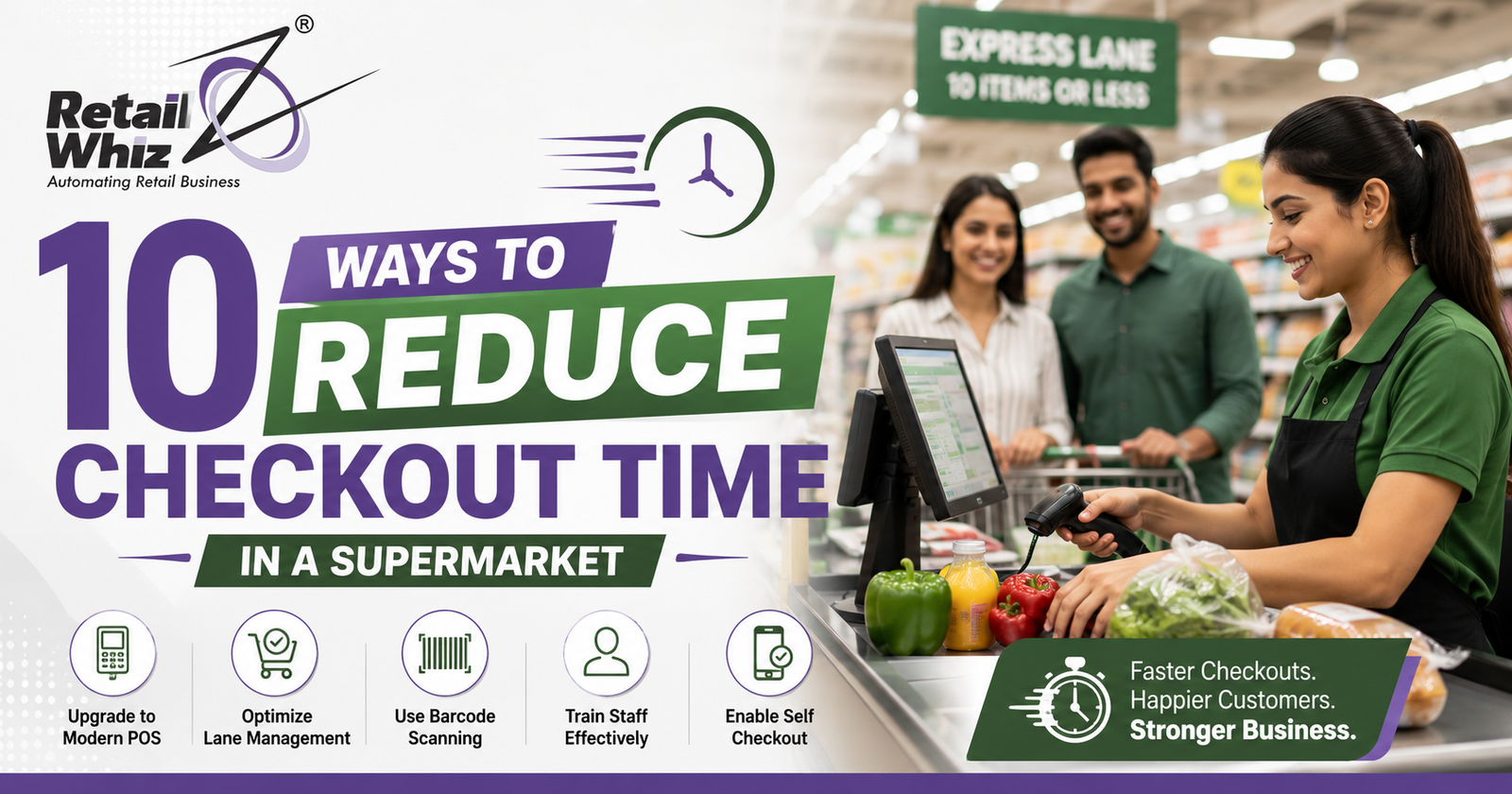
Long checkout queues are one of the biggest challenges supermarkets face. Customers expect a fast and smooth shopping experience, and lengthy waiting times can lead to frustration, abandoned purchases, and lower customer satisfaction. For supermarket owners and managers, reduce checkout time in a supermarket is not just about speeding up billing – it directly impacts customer retention, operational efficiency, and overall revenue.
Research consistently shows that shoppers are more likely to return to stores that provide a quick and convenient checkout experience. Whether it’s a neighborhood grocery store, a supermarket chain, or a hypermarket, optimizing the checkout process has become an essential part of retail operations.
This guide explores ten practical and effective ways supermarkets can reduce checkout time, improve customer experience, and increase operational efficiency.
Why Checkout Time Matters in Supermarkets
The checkout counter is often the final interaction customers have with your store. Even if shoppers enjoy their shopping experience, a long wait at the billing counter can negatively affect their overall perception.
Reducing checkout time helps supermarkets:
- Improve customer satisfaction
- Increase customer loyalty
- Reduce cart abandonment
- Process more transactions during peak hours
- Improve staff productivity
- Boost store profitability
A faster checkout process creates a better shopping experience and encourages repeat visits.
Common Causes of Long Checkout Queues
Before implementing solutions, it’s important to understand what causes delays at the checkout counter.
Some common reasons include:
- Manual billing processes
- Slow barcode scanning
- Inadequate billing counters
- Poor inventory management
- Payment processing delays
- Insufficient staff during peak hours
- Price verification issues
- System downtime
- Lack of customer queue management
Identifying these bottlenecks helps supermarkets develop targeted strategies for improvement.
1. Implement Modern POS Billing Software
One of the most effective ways to reduce checkout time is by upgrading to a modern POS (Point of Sale) system.
Traditional billing methods often require manual product searches and price entries, which significantly slow down transactions. Modern POS software automates the billing process and enables cashiers to complete transactions much faster.
Benefits of POS Software
- Quick product lookup
- Automated pricing
- GST-compliant billing
- Faster receipt generation
- Integrated inventory management
- Real-time sales tracking
With a reliable POS system, checkout counters can process more customers in less time.
2. Use Barcode Scanning Technology
Manual product entry increases billing time and creates opportunities for errors.
Barcode scanning allows products to be identified instantly, speeding up the checkout process and improving accuracy.
Advantages of Barcode Billing
- Faster product identification
- Reduced billing errors
- Accurate inventory updates
- Improved transaction speed
- Better stock management
Every second saved per transaction can significantly reduce queue lengths during busy shopping periods.
3. Introduce Self-Checkout Stations
Self-checkout systems enable customers to scan and pay for products independently.
Many supermarkets are adopting self-service checkout counters to reduce congestion and provide customers with more flexibility.
Benefits of Self-Checkout
- Reduced waiting times
- Increased checkout capacity
- Lower cashier workload
- Improved customer convenience
- Faster processing for small purchases
Self-checkout is particularly effective for customers purchasing a limited number of items.
4. Optimize Billing Counter Layout
The physical design of checkout counters plays an important role in transaction speed.
Poorly organized counters create bottlenecks that slow down both customers and cashiers.
Best Practices
- Ensure adequate space for product placement
- Position barcode scanners ergonomically
- Keep payment terminals easily accessible
- Minimize clutter around counters
- Use clear queue guidance systems
A well-designed checkout area allows transactions to flow more efficiently.
5. Offer Multiple Payment Options
Payment processing delays can significantly increase checkout times.
Customers prefer flexibility when making purchases, and limited payment options often lead to delays.
Essential Payment Methods
- UPI payments
- Credit cards
- Debit cards
- Mobile wallets
- Contactless payments
- Cash payments
Providing multiple payment options helps customers complete transactions quickly and conveniently.
6. Use Real-Time Inventory Management
Inventory-related issues frequently contribute to checkout delays.
Missing product information, incorrect pricing, or stock discrepancies can force staff to manually verify details during billing.
Benefits of Inventory Integration
- Accurate pricing information
- Real-time stock updates
- Reduced product lookup delays
- Improved billing accuracy
- Better customer experience
Integrating inventory management with billing software ensures smoother transactions.
7. Increase Staffing During Peak Hours
Many supermarkets experience predictable rush periods.
Common peak shopping times include:
- Weekends
- Evenings
- Public holidays
- Festival seasons
- End-of-month shopping periods
Having insufficient staff during these periods often results in long queues.
Effective Staffing Strategies
- Analyze historical sales data
- Schedule additional cashiers during busy periods
- Cross-train employees
- Maintain backup staff availability
Proper workforce planning helps manage customer traffic efficiently.
8. Implement Queue Management Systems
Queue management systems help organize customer flow and reduce perceived waiting times.
Without proper queue control, customers may become frustrated and checkout operations can become inefficient.
Queue Management Solutions
- Single-line queue systems
- Digital queue monitoring
- Customer guidance signage
- Express checkout lanes
- Queue analytics tools
Structured queue management improves both efficiency and customer satisfaction.
9. Create Express Checkout Counters
Not all customers require the same amount of processing time.
Customers purchasing only a few items often become frustrated when waiting behind large shopping carts.
How Express Counters Help
Express checkout lanes are designed for customers with a limited number of products.
Benefits
- Faster transactions
- Reduced congestion
- Better customer experience
- Improved queue distribution
Many supermarkets successfully use express counters to improve checkout efficiency during peak hours.
10. Train Cashiers for Speed and Accuracy
Technology alone cannot eliminate checkout delays.
Well-trained cashiers remain one of the most important factors in achieving fast checkout operations.
Training Areas
- POS system usage
- Barcode scanning techniques
- Payment processing
- Customer service skills
- Handling returns and exchanges
- Problem-solving procedures
Regular training improves transaction speed while maintaining billing accuracy.
The Role of Retail Technology in Faster Checkouts
Modern retail technology has transformed supermarket operations.
Advanced retail management systems help supermarkets automate several processes that traditionally slowed down checkout counters.
Key technologies include:
- Cloud-based POS systems
- Integrated inventory management
- Mobile POS solutions
- Digital payment systems
- Customer loyalty integration
- Automated pricing updates
Retailers that invest in technology often see significant improvements in checkout efficiency.
How Integrated Retail Software Reduces Checkout in a Supermarket
Many supermarkets use separate systems for billing, inventory, pricing, and customer management.
Disconnected systems often lead to delays because employees must switch between multiple applications.
Integrated retail software solves this challenge by connecting:
- Billing
- Inventory management
- Pricing control
- Customer data
- Loyalty programs
- Reporting and analytics
This creates a seamless checkout experience and reduces manual intervention.
Measuring Checkout Performance
Improvement begins with measurement.
Supermarkets should regularly monitor key checkout performance metrics.
Important KPIs
- Average Checkout Time: Measures the average duration of each transaction.
- Queue Length: Tracks the number of customers waiting.
- Transaction Processing Speed: Measures items processed per minute.
- Customer Satisfaction: Evaluates customer perception of checkout efficiency.
- Peak Hour Performance: Assesses checkout effectiveness during busy periods.
Monitoring these metrics helps identify improvement opportunities.
Challenges When Reduce Checkout Time in a Supermarket
While improving checkout speed offers clear benefits, supermarkets may encounter challenges during implementation.
Common Challenges
- Technology Costs: Upgrading POS systems and infrastructure requires investment.
- Employee Resistance: Staff may require time to adapt to new processes.
- System Integration Issues: Legacy systems can complicate implementation.
- Customer Adoption: Some customers may hesitate to use self-checkout solutions.
- Training Requirements: Employees need ongoing education and support.
Addressing these challenges through proper planning helps ensure successful implementation.
Future Trends in Supermarket Checkout Optimization
Retail checkout technology continues to evolve.
Several emerging trends are shaping the future of supermarket operations.
- Mobile Checkout: Customers use smartphones to complete purchases without visiting traditional counters.
- Contactless Payments: Faster and more secure payment options continue to gain popularity.
- Smart Shopping Carts: Advanced carts can automatically track purchased items.
- Digital Receipts: Electronic receipts eliminate printing delays.
- AI-Powered Queue Analytics: Retailers can predict congestion and optimize staffing levels.
- Fully Automated Checkout: Some stores are experimenting with cashier-less shopping experiences.
These innovations aim to create faster, more convenient customer journeys.
How Retailwhizz Helps Supermarkets Reduce Checkout Time
Retailwhizz provides retail management solutions designed to improve billing efficiency and streamline supermarket operations.
Key capabilities include:
- Fast POS billing
- Barcode scanning integration
- Real-time inventory management
- GST-compliant invoicing
- Customer loyalty management
- Multi-payment support
- Multi-store management
- Advanced reporting and analytics
By integrating billing, inventory, and customer management into a single platform, Retailwhizz helps supermarkets improve checkout speed while maintaining operational accuracy.
Conclusion
Checkout efficiency plays a crucial role in the success of any supermarket. Long queues can negatively impact customer satisfaction, reduce repeat visits, and limit sales opportunities during busy periods.
By implementing modern POS software, barcode scanning, self-checkout stations, inventory integration, express lanes, queue management systems, and employee training programs, supermarkets can significantly reduce checkout times and improve customer experiences.
The most successful retailers view checkout optimization as an ongoing process rather than a one-time project. Continuous monitoring, technology upgrades, and operational improvements help ensure customers enjoy a fast and convenient shopping experience every time they visit.
For supermarkets seeking sustainable growth, reducing checkout time remains one of the most effective ways to improve customer satisfaction, increase efficiency, and strengthen overall business performance.