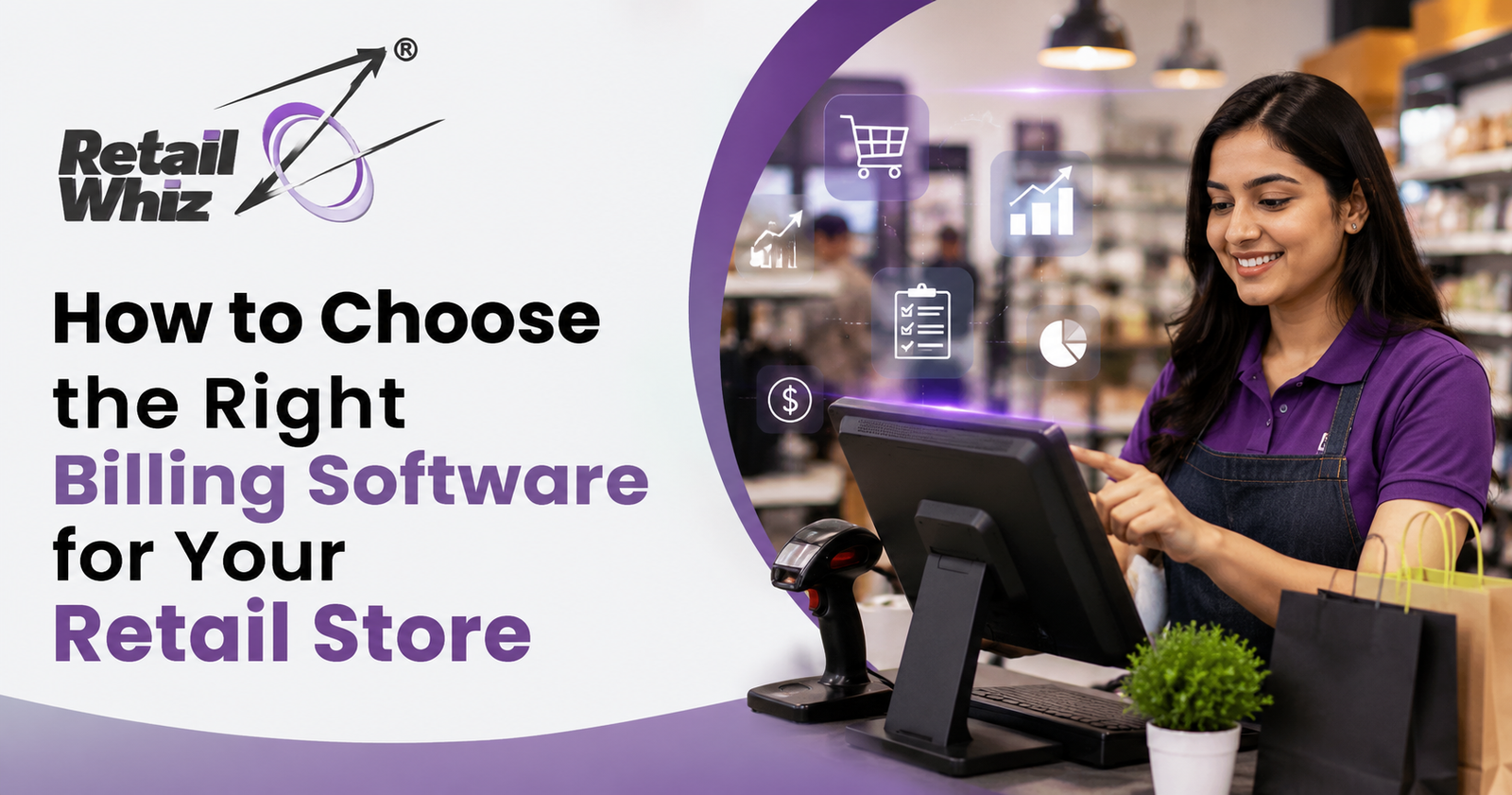
Running a retail store today means juggling billing, inventory, customer service, and compliance, all at the same time. If you are still relying on manual registers or outdated software, you already know how much time and money it costs in errors, delays, and unhappy customers. Choosing the right billing software for your retail store is one of the most important decisions you will make as a retailer, and it directly affects your daily operations, customer experience, and long term growth.
With so many options available in the market, from basic invoicing tools to full retail management systems, picking the right one can feel overwhelming. This guide breaks down everything you need to know about retail billing software, the must-have features, and how to evaluate the best fit for your business.
Why Billing Software Matters for Retail Stores
Billing software is no longer just about printing a receipt. Modern retail billing software handles everything from generating GST compliant invoices to tracking inventory in real time, managing customer loyalty programs, and providing sales analytics. A good billing system for retail stores helps you:
- Reduce billing errors and speed up checkout
- Maintain accurate stock levels automatically
- Stay compliant with GST and tax regulations
- Track sales performance across single or multiple stores
- Improve customer experience with faster, more accurate transactions
- Make data driven decisions using real time reports
For small shop owners and large retail chains alike, the right retail billing software is the backbone of daily operations. Choosing poorly can mean lost sales, compliance headaches, and frustrated staff and customers.
Key Factors to Consider When Choosing Retail Billing Software
1. Ease of Use
Your billing staff should be able to learn the software quickly without extensive training. A cluttered or complicated interface slows down billing at the counter, leading to longer queues and irritated customers. Look for a clean dashboard, simple navigation, and an intuitive checkout process that even non technical staff can operate confidently from day one.
2. GST and Tax Compliance
For retailers in India, GST compliance is non-negotiable. Your billing software should automatically calculate taxes, generate GST compliant invoices, and produce the reports needed for filing returns and audits. This alone can save hours of manual reconciliation every month and reduce the risk of penalties. If you want a deeper look at what to check before choosing a compliant system, our detailed guide on GST billing software for retail shops covers GST compliant invoicing, inventory control, and reporting in one place.
3. Inventory Management Integration
Billing and inventory should never operate in silos. When a sale is made, your stock levels should update automatically in real time. This prevents overstocking, stockouts, and the kind of manual stock counting that eats up staff hours. If your retail store has multiple locations, the software should sync inventory across all outlets so you can transfer stock instead of over-ordering separately for each store.
4. Multi-Store and Scalability Support
Even if you run a single outlet today, think ahead. A billing solution that only works for one store will hold you back if you plan to expand. Choose a system built to handle multiple locations, centralized reporting, and growing transaction volumes without slowing down or requiring a complete switch later.
5. Payment Flexibility
Customers today expect multiple payment options at checkout, including cash, cards, UPI, and digital wallets. Your billing software should support all major payment modes seamlessly, along with split payments and quick refunds, so checkout never becomes a bottleneck.
6. Barcode and POS Billing Speed
Speed at the billing counter directly affects customer satisfaction, especially during peak hours. Barcode scanning support, quick product search, and a fast point of sale interface reduce checkout time significantly. If billing speed and counter efficiency are a top priority for your store, it is worth comparing systems side by side. We have put together a complete breakdown of the best POS software for retail stores in India, covering billing speed, tax compliance, and multi-store features.
7. Reporting and Business Insights
A good billing system does more than record sales. It should give you access to detailed reports on sales trends, profit margins, cashier performance, and stock movement. These insights help you make smarter purchasing and pricing decisions instead of guessing what is working.
8. Customer Relationship and Loyalty Features
Retaining existing customers is often more cost effective than acquiring new ones. Billing software that includes built-in customer relationship management and loyalty features lets you reward repeat buyers, run personalized promotions, and build long term customer relationships directly from the billing counter.
9. Data Security and Backup
Your billing data includes sensitive customer information, transaction history, and financial records. Ensure the software you choose offers secure data storage, regular backups, and role based access control so only authorized staff can view or edit sensitive information.
10. Customer Support and Reliability
Billing software downtime means lost sales. Before committing to any vendor, check their support responsiveness, uptime track record, and whether they offer onboarding assistance and training for your staff.
Common Mistakes Retailers Make While Choosing Billing Software
Many retailers rush into a decision based purely on price and end up regretting it later. Some common mistakes include:
- Choosing a system without checking GST compliance features
- Ignoring scalability and picking software that cannot grow with the business
- Overlooking integration with existing accounting or inventory tools
- Not testing the software with a free demo before purchasing
- Underestimating the importance of staff training and ease of use
Avoiding these pitfalls early can save significant time, money, and operational stress down the line.
How Retail Billing Software Improves Customer Experience
Fast, accurate billing is one of the biggest factors influencing whether a customer returns to your store. Long queues, incorrect bills, or limited payment options push customers toward competitors. A modern billing system reduces wait times, eliminates manual calculation errors, and allows staff to focus on service rather than paperwork.
Beyond the counter, features like loyalty points, personalized offers, and membership tiers keep customers engaged long after checkout. If customer retention is a priority for your retail store, it is worth exploring how a dedicated loyalty program software integrated directly into your billing counter can turn one-time shoppers into repeat customers.
Billing Software and Inventory Management Go Hand in Hand
One of the most overlooked aspects of choosing billing software is how well it manages inventory alongside transactions. Manual stock counts are time consuming and often outdated the moment they are finished, and billing errors can go unnoticed until stock discrepancies pile up. A retail billing system with real time, centralized inventory control eliminates this problem, whether you operate a single grocery store or a chain of supermarkets. For a closer look at what to prioritize here, our guide on retail inventory management software features and benefits explains how centralized stock control prevents over-ordering and stockouts across multiple locations.
Steps to Choose the Right Billing Software for Your Retail Store
- Define your requirements. List out must have features based on your store size, product category, and number of locations.
- Shortlist vendors. Compare at least three to five billing software providers based on features, pricing, and reviews.
- Request a free demo. Test the interface with your actual products and billing scenarios before committing.
- Check compliance and integrations. Confirm GST compliance and compatibility with your existing accounting or ecommerce tools.
- Evaluate pricing transparently. Look beyond the subscription cost and check for hidden charges on updates, support, or additional users.
- Plan for training. Choose a vendor that offers onboarding support so your staff can start billing confidently from day one.
- Start with a trial period. Where possible, run the software alongside your existing system briefly to catch any gaps before a full switch.
Final Thoughts
Choosing the right billing software for your retail store is not just about printing receipts faster. It is about building a foundation for accurate transactions, GST compliance, smarter inventory control, and better customer relationships. Take the time to evaluate your specific needs, test a few options through free demos, and choose a system that can scale as your retail business grows.
A well chosen retail billing software does more than simplify your daily operations. It becomes the operational backbone that helps you serve customers faster, manage stock smarter, and make informed business decisions every single day.
Frequently Asked Questions (FAQs)
1. What is retail billing software?
Retail billing software is a system that helps retail stores generate invoices, process payments, manage inventory, and track sales at the point of sale. Modern solutions also include GST compliance, customer loyalty tools, and business reporting features.
2. Is GST compliant billing software mandatory for retail stores in India?
Yes, retail businesses in India are required to generate GST compliant invoices for taxable sales. Using GST billing software ensures accurate tax calculation, proper invoice formatting, and simplified return filing.
3. Can billing software handle multiple retail store locations?
Most modern retail billing software supports multi-store management, allowing centralized billing, inventory tracking, and reporting across all your outlets from a single dashboard.
4. How much does retail billing software cost?
Pricing varies widely depending on features, number of users, and whether it is cloud based or on-premise. Costs typically range from basic monthly subscriptions for small stores to custom enterprise pricing for large retail chains.
5. What features should I prioritize when choosing billing software for a small retail shop?
For small retail shops, prioritize ease of use, GST compliance, barcode billing support, basic inventory tracking, and multiple payment options. As your business grows, you can look for advanced features like loyalty programs and multi-store support.