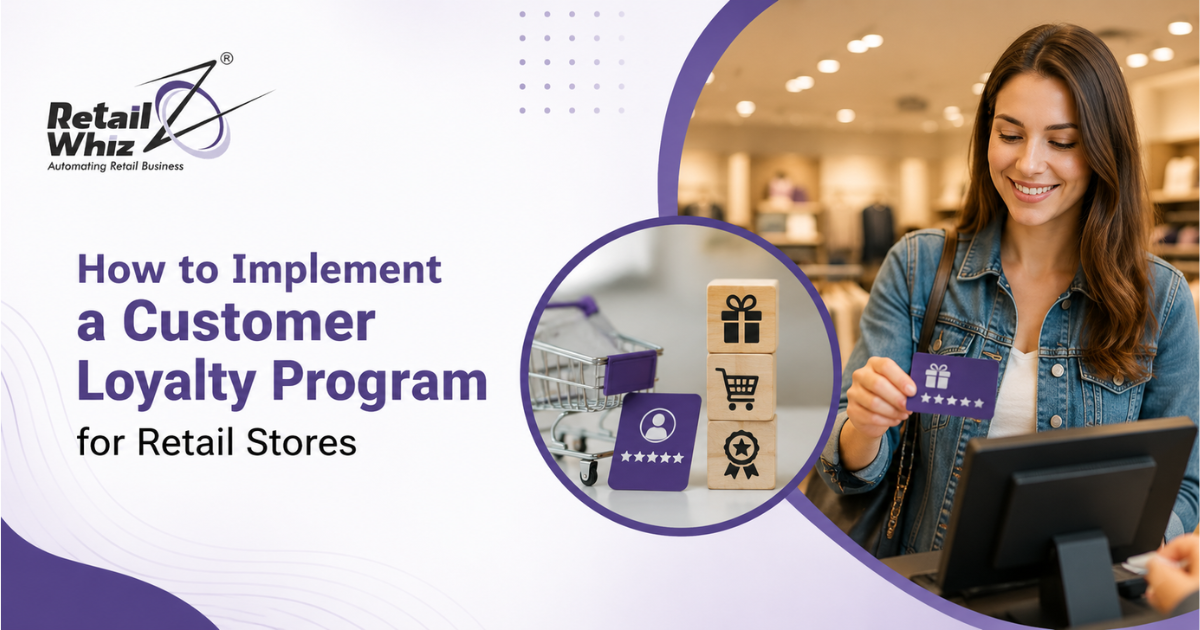
Retail acquisition costs keep climbing, and shoppers have less patience for brands that don’t give them a reason to come back. If you’ve been searching for how to implement a customer loyalty program for your retail store, you already know the theory: loyal customers spend more, visit more often, and cost far less to retain than new ones to acquire. The hard part is turning that idea into a program that actually works.
Most loyalty programs don’t fail because retailers picked the wrong rewards. They fail because implementation was rushed – the data wasn’t ready, staff weren’t trained, or the “value exchange” never felt worth it to the customer. This guide walks through a complete, step-by-step framework for building a customer loyalty program for retail stores that drives real repeat business, not just sign-ups that go quiet after month one.
By the end, you’ll have a practical roadmap covering loyalty program types, the exact steps to launch one, real-world examples, common mistakes to avoid, cost considerations, and the KPIs that tell you whether your program is actually working.
Why Retail Stores Need a Customer Loyalty Program in 2026
Customer loyalty is harder to earn than it used to be. Recent industry research shows that a majority of shoppers now say they’re less loyal to brands than they were a year or two ago, and analysts expect brand loyalty to keep softening even as loyalty program membership keeps climbing – most U.S. online adults already belong to at least one program. In other words, customers want to be rewarded, but they’re quicker than ever to walk away from a program that doesn’t deliver real value.
For retail stores specifically, a well-run loyalty program does four things a discount code never can:
- Lowers customer acquisition cost (CAC). Retaining an existing customer typically costs a fraction of what it takes to win a new one.
- Increases customer lifetime value (CLV). Loyalty members consistently show higher average order values and shop more often than non-members.
- Generates first-party data. As third-party cookies disappear, loyalty sign-ups are one of the few reliable ways to collect consented purchase and preference data.
- Builds a genuine competitive moat. A loyalty program tailored to your customers’ actual habits is far harder for competitors to copy than a price cut.
The retailers getting this right in 2026 aren’t the ones running the biggest discounts – they’re the ones treating loyalty as an always-on relationship, not a one-time campaign.
Types of Customer Loyalty Programs for Retail Stores
Before you implement anything, you need to choose a model. Here are the loyalty program structures retail stores use most often, along with where each one fits best.
| Loyalty Program Type | How It Works | Best For |
| Points-based loyalty program | Customers earn points per dollar spent and redeem them for discounts or products | High-frequency retail (grocery, beauty, apparel) |
| Tiered loyalty program | Customers unlock better perks as they spend more (Bronze/Silver/Gold-style tiers) | Mid-to-high spend retail where status motivates behavior |
| Paid/subscription loyalty program | Customers pay a recurring fee for instant, tangible perks (free shipping, exclusive pricing) | Retailers with strong logistics or frequent-purchase categories |
| Value-based / cause loyalty program | A portion of purchases supports a cause the customer cares about | Brands with strong values-driven audiences |
| Hybrid loyalty program | Combines two or more models (e.g., points + tiers) | Retailers wanting flexibility across customer segments |
There’s no universally “best” model – the right choice depends on your purchase frequency, margins, and what actually motivates your specific customers. That decision shapes everything that follows, so don’t skip it.
How to Implement a Customer Loyalty Program: Step-by-Step Framework
This is the core of the guide – a practical, ordered framework for retail loyalty program implementation. Each step builds on the one before it.
Step 1: Define Clear Goals and Success Metrics
Before you design a single reward, decide what the program needs to achieve. Is the priority higher repeat purchase rate, larger average order value, more first-party data, or reduced churn? Vague goals like “build loyalty” lead to programs nobody can measure. Pick two or three measurable objectives – for example, “increase repeat purchase rate by 15% within 12 months” – and let those numbers guide every later decision.
Step 2: Know Your Customers and What Actually Motivates Them
Pull existing purchase and behavior data to understand your customer segments. Some shoppers respond to straightforward discounts; others care more about early access, free shipping, or exclusive experiences. A loyalty program built on assumptions instead of real customer data tends to underperform – this is the step most retailers rush through, and it shows later in low engagement.
Step 3: Choose Your Loyalty Program Model
Using the comparison table above, select the structure that fits your margins, purchase frequency, and customer base. Keep the initial version simple. You can always add tiers, gamification, or partner perks once the core program proves itself.
Step 4: Design a Value Proposition Customers Can Explain in One Sentence
If a customer can’t describe what they get from your program in a single sentence, it’s too complicated. Compare these two examples:
- Weak: “Earn points and redeem them for rewards.”
- Strong: “Earn 1 point per $1 spent – 500 points gets you a free alteration or $25 off your next order.”
The stronger version is specific, tangible, and easy to repeat. That clarity is what drives sign-ups and, more importantly, ongoing engagement.
Step 5: Get Your Customer Data and Tech Stack Ready
Your loyalty program needs a single, reliable customer ID that works across your POS, e-commerce store, and marketing tools. Without this, you can’t recognize the same shopper online and in-store, which breaks the experience immediately. At minimum, your data model should capture:
- A unified customer ID across every channel
- Transaction history from both e-commerce and in-store POS
- Consent and communication preferences
- Loyalty-specific data – points balance, tier status, redemption history
Most retail stores use dedicated loyalty program software (rather than building in-house) to avoid stitching together CRM, POS, and email tools manually. It’s usually faster to launch and easier to adjust rules later without needing a developer every time.
Step 6: Map the Customer Journey and Key Touchpoints
Decide exactly when loyalty should show up: at sign-up, first purchase, tier upgrades, near-reward moments, and periods of inactivity. Each of these moments is an opportunity for a timely nudge – a reminder that a customer is 50 points from a reward converts far better than a generic monthly newsletter.
Step 7: Configure the Program Rules in Your Platform
Turn your value proposition into actual settings: earning rates, reward catalog, tier thresholds, and expiration rules. Keep the first version lean – you can always expand the reward catalog once you see what members actually redeem.
Step 8: Integrate Loyalty Across Every Channel
A retail loyalty program only works if it feels the same everywhere. In-store staff need to see loyalty status and apply redemptions at the register. Online, customers should see their points balance in their account, cart, and at checkout. This omnichannel consistency is one of the biggest differentiators between loyalty programs that get used and ones that get forgotten.
Step 9: Build a Simple Enrollment and Onboarding Flow
Ask for the minimum information needed to join – email and name is often enough to start – and use progressive profiling to learn more over time. Offer multiple ways to enroll: at checkout, via QR code in-store, or through an app. A confusing sign-up form is one of the fastest ways to lose a potential loyal customer before the program even begins.
Step 10: Set Up Automated, Behavior-Triggered Communication
Loyalty programs that rely only on periodic email blasts underperform. Instead, set up always-on triggers based on actual customer behavior:
- Welcome message explaining the program clearly
- Points-earned and points-expiring alerts
- “You’re close to your next reward” nudges
- Tier upgrade celebrations
- Win-back messages for dormant members
These automated touches are what keep loyalty visible between purchases, without requiring your team to run a new campaign every week.
Step 11: Train Store Staff and Run a Pilot
Before a full rollout, make sure in-store staff can explain the program confidently and handle common questions. Then test in a handful of stores or with a limited customer segment before scaling company-wide. A short pilot surfaces friction points – confusing redemption steps, unclear messaging – while the cost of fixing them is still low.
Step 12: Launch, Measure, and Continuously Optimize
Once the pilot performs well, roll the program out fully and shift focus to measurement. Compare loyalty members against non-members on repeat purchase rate, average order value, and customer lifetime value. Loyalty implementation doesn’t end at launch – the retailers who see the strongest long-term results are the ones who keep testing reward structures, messaging timing, and segmentation months and years after go-live.
Common Mistakes Retailers Make When Implementing a Loyalty Program
- Leading with discounts instead of value. Points and cash-back alone rarely build emotional loyalty – research shows emotional engagement now drives significantly more repeat purchases than transactional rewards alone.
- Disconnecting loyalty from CRM data. If your loyalty platform can’t see purchase history, you can’t personalize anything.
- Overcomplicating the rules. Roughly a third of consumers say complex loyalty schemes are simply confusing enough to ignore.
- Treating launch as the finish line. Programs that aren’t reviewed and adjusted regularly tend to plateau within the first year.
- Ignoring in-store staff training. Confused employees create a confusing customer experience, no matter how good the backend is.
How Much Does It Cost to Implement a Customer Loyalty Program?
Costs vary widely based on program complexity and whether you build custom or use existing loyalty program software. Broadly, retail stores fall into three cost tiers:
- Small/independent retailers: Entry-level loyalty apps and plug-ins often start in the range of $30–$100/month, suitable for simple points-based programs.
- Mid-size retail chains: Dedicated loyalty and CRM platforms typically run from a few hundred to a few thousand dollars a month, depending on customer volume and channel integrations.
- Enterprise retailers: Custom-built or highly integrated loyalty ecosystems (multi-market, omnichannel, AI-personalized) often involve custom pricing and larger implementation budgets.
In nearly every case, the platform cost is smaller than the cost of a poorly implemented program – abandoned sign-ups, unused rewards, and unmeasured ROI are the real expenses to avoid.
Real Examples of Successful Retail Loyalty Programs
Looking at proven models helps ground your own strategy:
- Points-based: Beauty and grocery retailers often use straightforward points-per-dollar systems that are easy for customers to understand at a glance.
- Tiered: Fashion and lifestyle retailers commonly use tier-based programs where higher spend unlocks status perks like early access or free alterations.
- Paid/subscription: Programs offering instant, tangible perks like free or fast shipping tend to see meaningfully higher purchase frequency among paying members compared to non-members.
- Community-driven: Some beauty and lifestyle brands pair their rewards program with an online community, using peer engagement to reinforce loyalty beyond pure transactions.
The common thread across all of these: the value is specific, easy to explain, and delivered consistently across every channel – not just the ones a marketing team happens to control.
Key Metrics to Track After Launching Your Loyalty Program
Once your program is live, these KPIs tell you whether it’s actually working:
- Enrollment rate – percentage of customers who join relative to total customer base
- Active member rate – percentage of enrolled members who actually engage or redeem
- Repeat purchase rate – comparing loyalty members vs. non-members
- Average order value (AOV) – for members vs. non-members
- Customer lifetime value (CLV) – the long-term financial impact of loyalty
- Redemption rate – how many earned rewards are actually claimed
- Program ROI – revenue attributable to loyalty relative to program cost
Retail loyalty programs that are actively measured and adjusted report meaningfully stronger ROI than static, “set and forget” programs – a gap that tends to widen the longer a program runs without review.
Final Thoughts
Implementing a customer loyalty program for a retail store isn’t about picking the flashiest rewards – it’s about clear goals, clean customer data, a value proposition people can actually explain, and consistent execution across every channel your customers use. Follow the step-by-step framework above, avoid the common pitfalls, and treat launch as the beginning of the work, not the end of it.
If you’re planning to build or improve a retail loyalty program and want guidance tailored to your store’s specific customer base and tech stack, RetailWhizz can help you design an implementation plan that fits your business from day one.
Frequently Asked Questions
How do you implement a customer loyalty program for a retail store?
You implement a customer loyalty program by setting clear goals, choosing a loyalty model that fits your customers, preparing clean customer data, configuring program rules in a loyalty platform, integrating it across in-store and online channels, and continuously measuring and optimizing performance after launch.
What should a retail loyalty program include?
At minimum, it should include a clear, easy-to-explain value proposition, a simple way to earn and redeem rewards, consistent messaging across channels, and a way to measure its impact on repeat purchases and customer lifetime value.
What is the best type of loyalty program for a small retail store?
For most small and independent retailers, a simple points-based program is the easiest to launch and explain. Tiered or paid programs tend to make more sense once you have enough purchase volume and data to justify the added complexity.
How long does it take to launch a customer loyalty program?
A simple points-based program can often launch within a few weeks using existing loyalty software. More complex tiered or omnichannel programs, especially those requiring POS and CRM integration, typically take a few months from planning to full rollout.
How do you measure if a loyalty program is successful?
Compare loyalty members against non-members on repeat purchase rate, average order value, and customer lifetime value, alongside enrollment and redemption rates. A successful program shows a clear, sustained gap between member and non-member behavior.